Does Homeowners Insurance Cover Termite Damage
Homeowners insurance usually doesn’t cover termite damage since it’s considered a preventable maintenance issue, not a sudden event. Insurance focuses on unexpected, accidental events like fires. However, if termites cause something like a fire that’s covered, you might get some help. Regular inspections and maintenance can prevent infestations. Want to find out how insurance can still be a safety net in certain situations? There’s more to discover.
Key Takeaways
- Homeowners insurance typically does not cover termite damage due to its gradual and preventable nature.
- Termite-related damage is considered a maintenance issue, not a sudden, accidental event.
- Fire caused by termite-compromised wiring may be covered as a sudden and accidental peril.
- Coverage might apply if hidden termite damage leads to an unexpected structural collapse.
- Policies usually exclude extermination and repair costs for termite damage.
Why Isn’t Termite Damage Covered?
Have you ever wondered why termite damage isn’t covered by homeowners insurance? It’s mainly because termite destruction happens gradually, over months or years, rather than suddenly. Homeowners insurance focuses on sudden, accidental events like fires or storms. By the time you notice the damage, termites have likely been at work for a while, making it a case of progressive damage, which insurers typically exclude. Moreover, termites are known as “silent destroyers,” and prevention is considered part of regular home maintenance. Insurers expect you to manage potential infestations through inspections and pest control. Policies often exclude damage from neglected maintenance. Finally, many policies specifically exclude pests like termites, categorizing them separately from covered perils, reinforcing why both treatment and repair costs fall on the homeowner.
When Coverage Might Apply
You might find coverage for termite-related damage if it results from a covered peril like fire, which could occur when termites chew through wiring. Additionally, sudden structural collapse due to hidden termite damage might be covered if it’s treated as an accidental event. Homeowners insurance typically does not cover termite damage, as it is considered a preventable maintenance issue. Always check your policy’s specific terms, as the connection between termite damage and a covered peril is essential for a successful claim.
Fire Caused by Termites
When termites compromise your home’s wiring, they can become an unexpected fire hazard. These pests often chew through electrical insulation, exposing wires that can spark and ignite nearby materials.
If a fire starts, it’s classified as sudden and accidental, which means your standard homeowners insurance should cover the damage. Fire is a universally recognized peril, and policies typically reimburse for fire-related destruction, regardless of how it started. It’s important to remember that insurance typically does not cover termite damage itself. Insurers focus on the fire’s cause, examining if it was directly due to the wiring failure.
Confirm you document everything thoroughly with photos and reports. Contact your insurer promptly to verify coverage, emphasizing the fire as the primary peril rather than the termite infestation.
Sudden Structural Collapse
Though standard homeowners insurance often excludes termite damage, there are scenarios where a sudden structural collapse might be covered.
If hidden termite damage unexpectedly causes part of your home to collapse, your policy’s collapse provision might apply. Here’s when coverage could kick in:
- Sudden and Accidental: The collapse must be unexpected and not a result of visible or foreseeable deterioration.
- Hidden Damage: The termites’ presence and damage should have been concealed, leaving you no reasonable way to detect it beforehand.
- Resulting Damage While the termite infestation itself isn’t covered, the damage from the collapse might be, especially if you couldn’t have known about the issue.
Linked to Covered Peril
Steering through the complexities of homeowners insurance and termite damage involves understanding how coverage can sometimes link to a covered peril.
If termites chew through electrical wiring, sparking a fire, your policy might cover the resulting fire damage since fire is a standard covered peril. However, the termite damage itself remains excluded. Insurers focus on the proximate cause, meaning the fire must be the direct cause of the damage claimed.
In rare cases, a sudden event like a burst pipe creating hidden moisture could instigate termite activity, potentially leading to coverage.
But, these scenarios are highly nuanced and depend on policy specifics. Remember, insurance isn’t for termite removal; it’s about covering the peril-induced loss.
Preventive Measures to Avoid Termite Damage
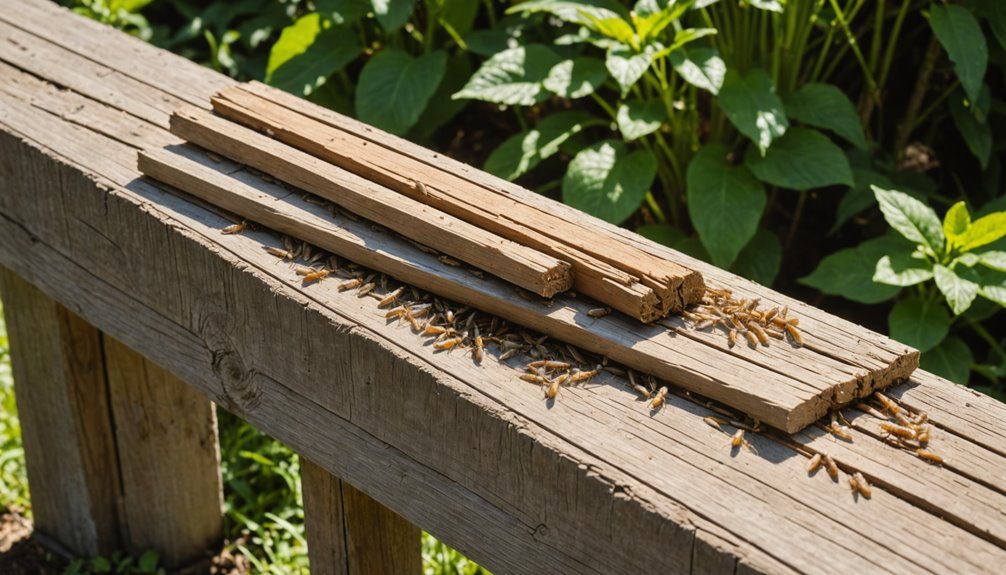
To keep termites at bay, start with regular inspections to spot early signs of infestation.
Address moisture issues by fixing leaks and ensuring proper drainage, as damp environments attract these pests.
Additionally, reduce wood-to-soil contact to limit their access points around your home.
Regular Inspections Essential
Even if termites are notoriously elusive, regular inspections are crucial to catch their activity early and prevent costly damage.
You should schedule professional inspections annually, as termites often hide in walls, foundations, and framing. These inspections, costing between $50 and $250, are a worthwhile investment compared to potential repair costs.
Key Inspection Areas:
- Moisture-Control Checks: Termites thrive in damp conditions, so inspect gutters, downspouts, and pipes. Divert water away from your foundation.
- Wood and Foundation Condition: Examine wooden areas like windows and doorframes for signs of damage. Check for mud tubes which indicate entry points.
- Yard and Exterior Inspections: Remove dead trees and debris. Keep firewood away from your home to prevent attracting termites.
Regular checks facilitate early detection and prevention.
Reduce Wood Contact
While termites can be relentless, you can minimize their threat by reducing wood contact with soil. Keep all wood at least six inches above the ground. Elevate decks and porches, and use pressure-treated wood or steel framing near the soil.
Stone or concrete bases can effectively break contact. Promptly replace any decayed wood.
Move cellulose materials, like firewood and mulch, away from your home’s foundation. Store firewood 20 feet away and at least eight inches off the ground. Clear dead trees and stumps from your property.
Maintain a 12-inch gap between shrubbery and walls. Avoid placing wooden landscaping timbers against the house, and opt for cellulose-free mulch.
Keep grass trimmed to reduce moisture and concealment around wood elements.
Address Moisture Issues
Addressing moisture issues is crucial to prevent termite damage. By managing moisture around your home, you can reduce the risk of attracting these pests. Here are some steps to contemplate:
- Foundation Drainage: Verify gutters and downspouts direct water away from your foundation. Use splash blocks and maintain proper yard grading to prevent water from pooling near your home.
- Leak Repair: Fix any leaking faucets, pipes, and air-conditioning units promptly. Regularly check for roof leaks and seal cracks around water lines to prevent moisture buildup.
- Crawl Space Management: Keep vents clear and use vapor barriers or dehumidifiers to control humidity levels. Remove any standing water immediately to avoid creating a termite-friendly environment.
Taking these steps can help keep your home safe from termites.
What If Termites Are Found?
When termites are discovered, you might be surprised to learn that your homeowners insurance usually won’t cover the extermination or repairs. Termite damage is often seen as a maintenance issue, leaving you to handle costs out of pocket. Structural damage like weak floors and foundations isn’t typically covered, nor is damage to personal property. In rare cases, coverage might apply if termites contributed to a covered peril, like a fire.
| Scenario | Coverage Likely? |
|---|---|
| Termite infestation alone | No |
| Fire caused by termites | Yes, if fire is a covered peril |
| Sudden collapse, hidden damage | Possibly, if unknown |
To pursue a claim, documenting the discovery, extent of damage, and any linked covered event is essential.
Alternative Ways to Protect Against Termite Damage
Even though homeowners insurance often doesn’t cover termite damage, you can take proactive steps to protect your property.
Start by focusing on moisture control and reducing wood-to-soil contact. Here are some effective strategies:
- Moisture Control:
- Repair plumbing leaks quickly.
- Clean gutters regularly to guarantee proper drainage.
- Use dehumidifiers in damp areas like basements.
- Reduce Wood-to-Soil Contact:
- Keep wooden structures 12 inches above soil.
- Avoid stacking timber against exterior walls.
- Use concrete footers for wooden posts.
- Use Termite-Resistant Materials:
- Choose steel or termite-resistant woods.
- Apply borate treatments to unfinished wood.
- Install termite shields around vulnerable areas.
How to Understand Your Policy’s Termite Coverage
How can you make sense of your homeowners insurance policy when it comes to termite coverage? Start by checking the exclusions section, where termite damage often appears alongside pests. Understand terms like “covered peril” and “sudden and accidental loss” to see if any exceptions might apply. Regular maintenance is key, as insurers expect you to prevent infestations.
Review your policy for any specific exceptions, such as termite entry due to a covered event like a burst pipe. Confirm if resulting damage, like fire from chewed wiring, might be covered.
Here’s a quick guide:
| Policy Section | What to Check | Why It Matters |
|---|---|---|
| Exclusions | Termites listed with pests | Confirms standard exclusion |
| Covered Perils | Definitions and exceptions | Identifies potential coverage triggers |
| Dwelling/Property | Structural vs. personal property terms | Clarifies coverage differences |
Frequently Asked Questions
How Can I Tell if My Home Has Termite Damage?
Check for mud tubes, discarded wings, and wood-to-soil contact. Tap wood for hollow sounds, inspect for crumbling or pinholes, and watch for bubbling paint. Listen for clicking sounds. Consider a professional inspection if you’re unsure.
Are There Signs of a Termite Infestation I Should Watch For?
Look for mud tubes, discarded wings, or blistered wood. Check for stuck windows, hollow-sounding wood, and frass. Watch for peeling wallpaper and weakened floors. Regular inspections and moisture control help catch infestations early.
Can Termite Damage Affect My Home’s Resale Value?
Yes, termite damage can impact your home’s resale value. An active infestation might reduce it by 20% to 25%. Even with repairs, buyers may hesitate, and a history of termites could still lower your selling price.
What Are the Most Common Types of Termites in Homes?
You’ll encounter subterranean, drywood, dampwood, and Formosan termites most often in homes. Subterranean termites are the most destructive, while drywood termites target above-ground wood. Dampwood termites prefer moisture, and Formosan termites are aggressive and invasive.
How Quickly Can Termites Cause Significant Damage?
Termites can cause significant damage in as little as 6 months. Large colonies, like Formosan termites, may cause severe structural damage in just 1 to 3 months. Keep an eye out for signs to prevent costly repairs.
Conclusion
You might assume your homeowners insurance covers everything, but it typically doesn’t include termite damage. Insurers see termite damage as preventable with proper maintenance. To protect yourself, stay proactive, conduct regular inspections and consider professional pest control services. If you discover termites, act swiftly to minimize damage. Review your policy closely to understand any specific terms related to pests. Remember, taking preventive steps now can save you from costly repairs later.