Baby Termites Identification
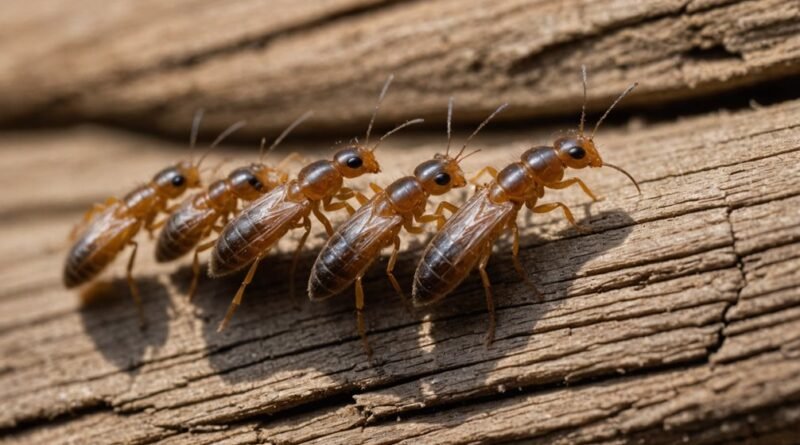
You can identify baby termites by their pale white or translucent color and soft, oval-shaped bodies measuring just 1–2 mm long — about the size of a grain of rice. Their straight, bead-like antennae and thick waists set them apart from other insects. They’re typically found near moisture-rich areas like foundations, crawl spaces, and leaky pipes. Spotting them early is critical, and there’s much more you’ll want to know to protect your home.
Key Takeaways
- Baby termites are 1–2 mm long, soft, and white or translucent, resembling a tiny grain of rice.
- They hatch from pale, tiny eggs as nymphs that look like miniature versions of adult termites.
- Baby termites have straight, bead-like antennae and thick waists, unlike ants with bent antennae and pinched waists.
- Their soft, oval-shaped bodies are pale or translucent, distinguishing them from darker, harder adult termites.
- Finding baby termites signals an actively expanding colony, making early identification critical to preventing structural damage.
What Do Baby Termites Actually Look Like?
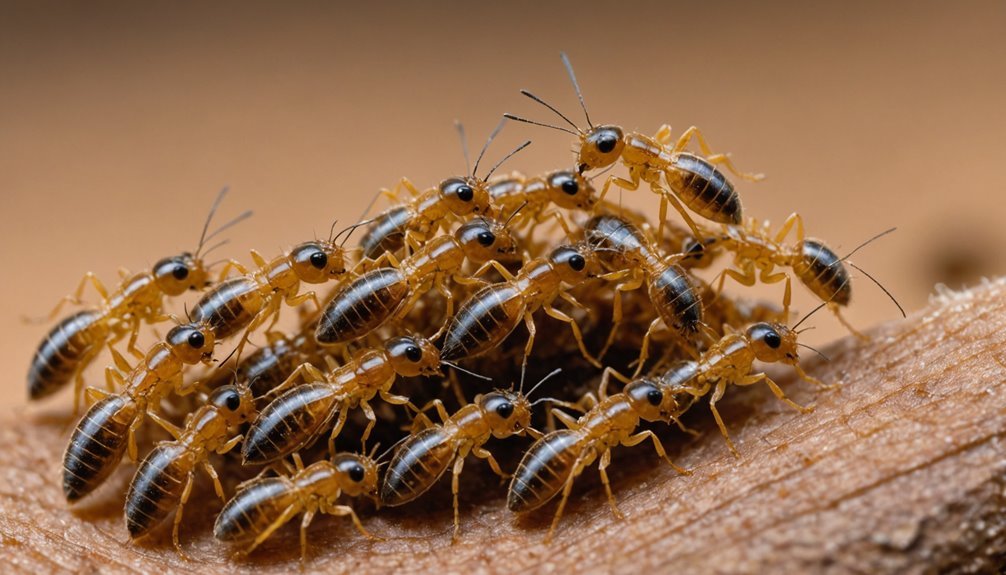
Baby termites start as tiny eggs — white, pale yellow, or translucent — laid deep inside a protected nest where you’re unlikely to ever see them.
Once they hatch, they become nymphs that look like miniature versions of adult termites. You’ll notice their bodies are soft, pale, and cream-colored, making them easy to mistake for tiny white ants.
The key differences are in the details. Baby termites have straight antennae that point directly outward, while ants have bent ones. Their waists are also thicker and less pinched than an ant’s.
If you disturb infested wood or a mud tube, you might spot these slow-moving, fragile insects clustered near the nest — small, pale, and barely distinguishable from the surrounding wood or soil. They measure approximately 1/10 inch long, making them incredibly difficult to detect with an untrained eye.
Size, Color, and Body Shape of Baby Termites
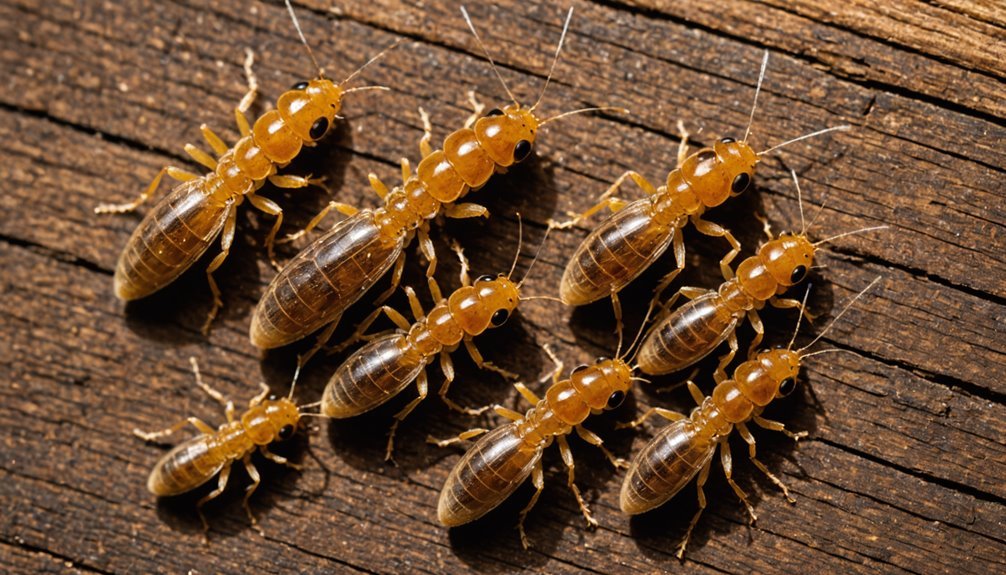
Tiny and easy to overlook, baby termites measure roughly 1–2 mm long — about the size of a grain of rice. Their bodies are soft, pale white or cream, and often translucent. You’ll notice a uniform shape with no pinched waist, six legs, and straight antennae — key differences from ants.
| Feature | Baby Termites | Adult Termites |
|---|---|---|
| Size | 1–2 mm | 6–13 mm |
| Color | White/translucent | Pale to dark |
| Body shape | Soft, oval | Harder, segmented |
| Waistline | Straight | Straight |
| Antennae | Straight | Straight |
Their small size and pale coloring help them blend into wood and soil, making them difficult to spot without close inspection. Their segmented body structure — consisting of a head, thorax, and abdomen — provides them with the flexibility and mobility needed to move through tight spaces within colonies.
Why Baby Termites Are More Dangerous Than They Look
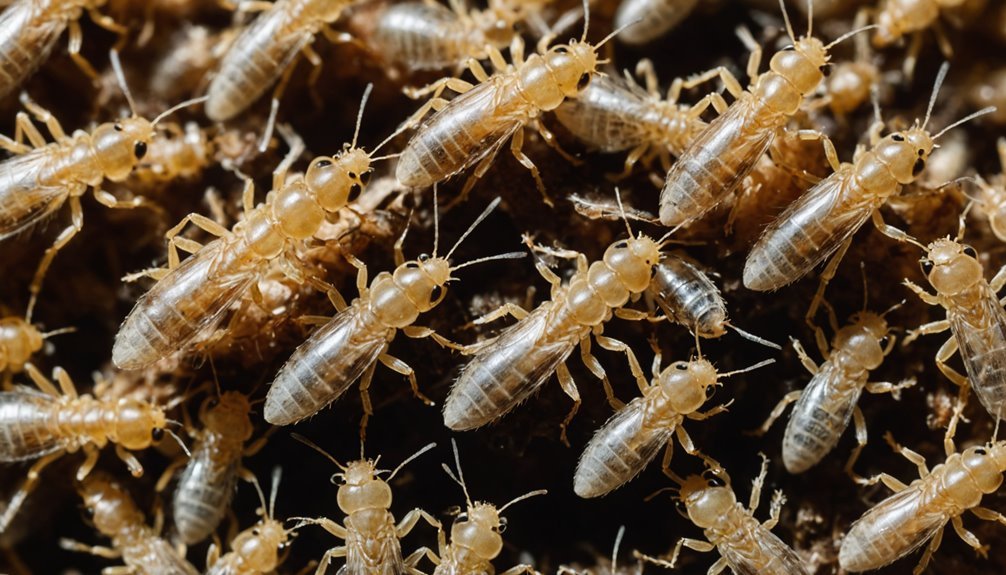
When you spot baby termites, you’re not looking at a minor nuisance—you’re seeing evidence of a colony that’s actively expanding out of sight.
Those larvae will mature into worker termites that silently feed on your home’s wood and structural components, often causing serious damage long before you notice any warning signs.
The longer the colony grows unchecked, the harder it becomes to eliminate and the more costly the structural repairs you’ll face. Termite damage costs the world an estimated 40 billion dollars annually, making early detection and intervention critical to protecting your property.
Hidden Colony Growth Risks
Although baby termites are small enough to overlook, their hidden development is what makes them genuinely dangerous.
Larvae stay buried deep inside wood or soil, fed and protected by workers while the colony quietly expands. By the time you notice surface signs, damage may already span multiple zones behind your walls or beneath your floors.
High-risk conditions accelerate this process. Moist wood, soil contact, foundation gaps, and poor ventilation give termites everything they need to grow undetected.
Because they feed from the inside out, the structure can look intact while serious damage accumulates underneath.
The longer detection takes, the more expensive the outcome. Early concealment is exactly why infestations so often reach a critical stage before you ever realize there’s a problem. Recognizing early signs such as mud tubes and discarded wings can be the difference between catching an infestation early and facing extensive structural repairs.
Larvae Become Structural Threats
Baby termites look harmless—soft-bodied, pale, and barely visible to the naked eye—but they’re the colony’s pipeline to its next generation of wood-consuming workers, soldiers, and reproductives.
Every larva that survives increases the colony’s long-term capacity to damage your home’s structural timber.
Larvae can’t digest wood themselves, but workers feed them by consuming cellulose from your beams, joists, and flooring. That dependence links larval survival directly to ongoing wood removal inside your walls.
By the time you spot larvae, damage is likely already occurring in places you can’t see.
Finding larvae confirms an active, established colony—not a passing intrusion. The infestation’s growth pipeline is already running, and without treatment, each surviving larva becomes another adult capable of feeding on your structure. As the colony expands, repair and extermination costs can climb well beyond what most homeowners anticipate when damage is finally uncovered.
Baby Termites vs. Ants: How to Tell the Difference
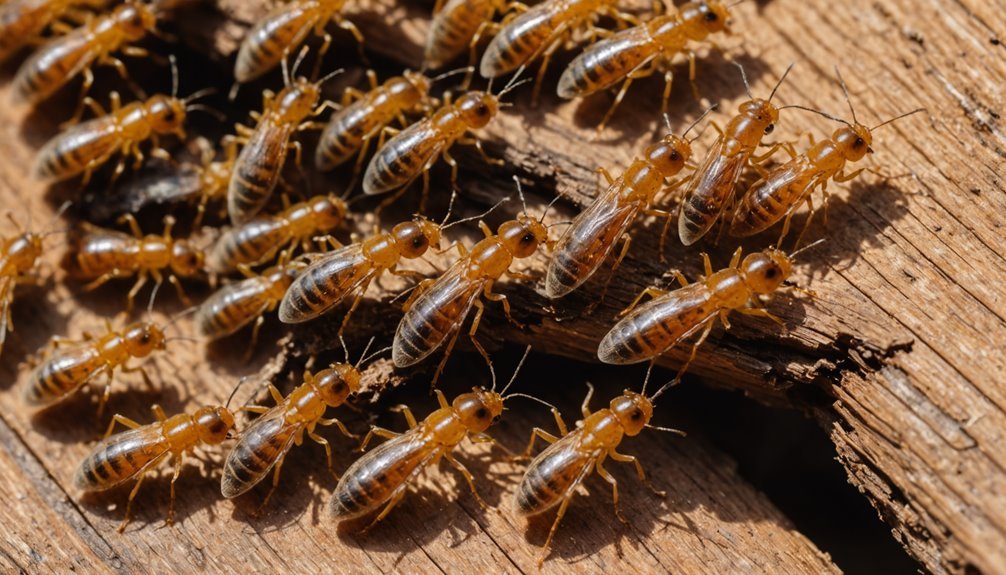
Telling baby termites apart from ants can be tricky, but a few physical traits make the difference clear.
First, check the waist. Termite nymphs have a straight, broad body with no visible pinch between the thorax and abdomen. Ants, even young ones, show a narrow, pinched waist.
Next, look at the antennae. Termites have straight, bead-like antennae, while ants have bent or elbow-shaped ones.
Color also helps — termites are pale or white, while ants are usually darker.
Don’t confuse termites for “white ants”; they’re entirely different insects.
If you spot winged swarmers, equal-sized wings point to termites, while uneven wings indicate ants.
Using these three traits together gives you the most reliable identification.
Where Baby Termites Hide Inside Your Home
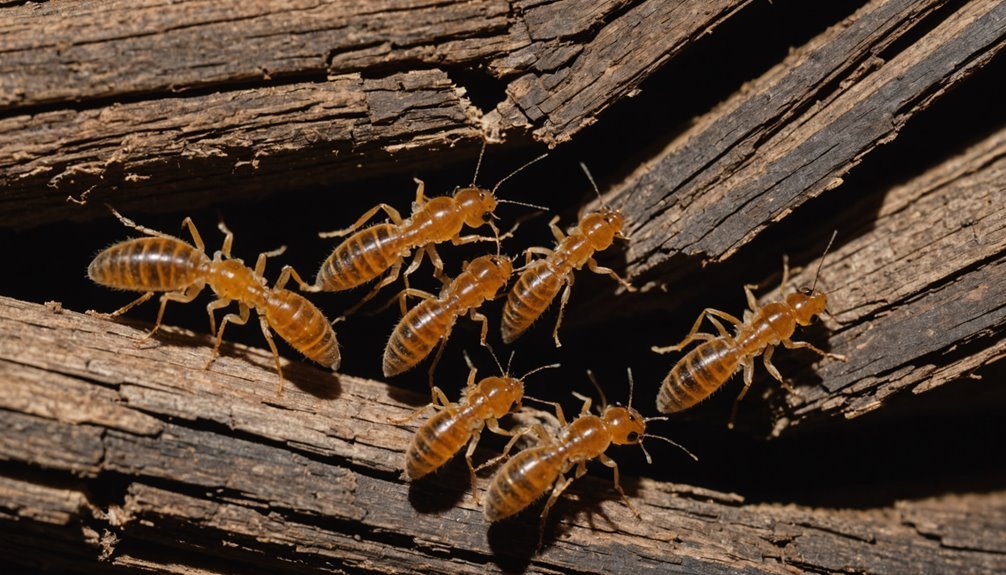
You’ll find baby termites hiding in the same concealed, moisture-rich zones where colonies first take hold—foundations, crawl spaces, wall cavities, and wooden floors.
Moisture is the key driver, so areas under sinks, near leaky pipes, and around HVAC components give hidden termite populations exactly what they need to survive.
Check these spots regularly, because early-stage infestations rarely announce themselves in plain sight.
Common Indoor Hiding Spots
Once baby termites hatch, they don’t stay in one place—they scatter into the hidden recesses of your home almost immediately.
They’ll move into wall voids, hollow spaces behind drywall, and gaps around baseboards where activity continues undetected. You’ll find them beneath hardwood, laminate, or tile flooring, feeding inside subflooring before any surface damage appears.
Crawl spaces and basements are especially vulnerable. Subterranean species travel from soil through foundation access points, leaving mud tubes as evidence.
Attic rafters and roof framing can also harbor hidden colonies.
Don’t overlook cabinets, under-sink areas, and wood furniture. Gaps around pipes, electrical wiring, and utility penetrations create concealed entry routes that connect interior spaces—giving baby termites easy access to areas you’d rarely think to inspect.
Moisture Attracts Hidden Termites
Moisture is the hidden driver behind most termite infestations—and baby termites exploit it from the moment they hatch.
Damp environments give colonies the humidity and concealment they need to expand undetected. You’ll rarely see them because they stay deep inside moisture-rich voids.
Watch for these three moisture-related warning signs:
- Blistering or bubbling paint — often signals damp wood with hidden termite activity beneath the surface.
- Mud tubes near moisture sources — indicate active termite travel routes connected to wet entry points.
- Hollow-sounding wood in damp areas — suggests internal structural damage where termites have been feeding.
Fix leaks immediately, improve drainage, and seal utility gaps with caulk or grout.
Eliminating moisture cuts off the conditions that keep hidden termites protected.
Mud Tubes, Frass, and Other Signs of Baby Termites
When looking for signs of baby termites, mud tubes are often your clearest clue. Subterranean termites build these pencil-thin, earth-colored tunnels from soil, wood particles, and saliva. You’ll find them along foundation walls, crawl spaces, support beams, and plumbing penetrations.
| Sign | What to Look For |
|---|---|
| Active Mud Tubes | Moist, darker, slightly sticky feel |
| Old Mud Tubes | Crumbling, brittle, but still significant |
| Frass | Dark dots near wood, linked to drywood termites |
| Accompanying Damage | Hollow wood, blistered paint, discarded wings |
Break a tube open and check back within 48 hours. If it’s repaired, termites are active. Discarded wings, hollow-sounding wood, and blistered paint strengthen your suspicion of a broader infestation nearby.
When Should You Call a Pest Control Professional?
Spotting mud tubes, frass, or hollow-sounding wood puts you one step closer to confirming a termite problem—but identifying the pest accurately is where a licensed professional becomes necessary.
Don’t wait if you’re noticing warning signs—here’s when to call immediately:
- You’ve found pale, slow-moving insects in walls, crawl spaces, or moist wood that could be termite larvae.
- Leaky pipes, poor ventilation, or water seepage are present alongside any signs of insect activity.
- DIY moisture fixes haven’t stopped the problem, and damage appears to be spreading inside structural materials.
A licensed professional can confirm the infestation, assess its extent, and apply termite-specific treatments like termiticides or bait systems—reducing the risk of misidentification and ineffective control.
Frequently Asked Questions
Can Baby Termites Survive Without the Rest of Their Colony?
No, baby termites can’t survive without their colony. They depend on worker termites to feed, protect, and keep them warm. Without the colony’s support, you’d see them die rapidly due to their helpless, underdeveloped state.
How Long Does It Take for Baby Termites to Reach Adulthood?
You won’t find a fixed timeline, as baby termites take varying amounts of time to reach adulthood. They pass through several molts, with development speed depending on species, colony conditions, and environmental factors.
Do Baby Termites Cause Allergic Reactions or Health Problems in Humans?
Baby termites don’t directly cause allergic reactions, but they’re part of an infestation that can. You may experience sneezing, wheezing, or hives from airborne allergens produced by the colony’s dust, frass, and shed body parts.
Can Baby Termites Be Transported Unknowingly Through Furniture or Moving Boxes?
Yes, you can unknowingly transport baby termites through wooden furniture or cardboard boxes. They’re hidden deep inside infested wood or moist materials, making them nearly impossible to detect before you’ve already moved them indoors.
Are Baby Termites More Common in Certain Geographic Regions or Climates?
Yes, you’ll find baby termites more commonly in warm, humid regions like the South, Southeast, and Southwest. These climates support active colonies year-round, making infestations far more frequent than in cooler northern states.
Conclusion
Now that you know what baby termites look like and where they hide, you’re better equipped to catch an infestation early. Don’t ignore the warning signs like mud tubes, frass, or tiny pale insects crawling near wood. The sooner you act, the less damage they’ll cause. If you’re spotting any of these red flags, it’s time to call a pest control professional before a small colony turns into a costly nightmare.