How to Spot Termite Infestations Early
To spot termite infestations early, you’ll want to check for mud tubes on your foundation, hollow-sounding wood, discarded wings near windows and doors, and frass that looks like tiny sawdust piles. Look for bubbling paint, warped floors, or doors and windows that suddenly stick. These signs often appear long before serious structural damage sets in. The more you know about each warning sign, the better equipped you’ll be to catch a colony before it costs you thousands.
Key Takeaways
- Look for bubbling paint, warped floors, or sticking doors and windows, which can signal hidden termite activity within walls.
- Mud tubes on foundation walls or crawl spaces are a strong indicator of an active subterranean termite infestation.
- Discarded wings near windowsills or light sources suggest reproductive swarmers from a nearby established termite colony.
- Tap or probe wood surfaces; hollow sounds or easy penetration with a screwdriver indicate internal termite damage.
- Small oval pellets resembling sawdust near wood surfaces are drywood termite frass, confirming an active infestation nearby.
Where Termites Hide First in Your Home
Termites don’t announce themselves — they hide, and they’re good at it. They target specific zones first, so knowing where to look gives you a real advantage.
Start at your foundation. Subterranean termites live underground and move upward, so soil touching your foundation is their first access point. Check concrete stoops, slab joints, and garage door frames where wood meets concrete.
Subterranean termites move up from the soil — your foundation is always their first target.
If your siding sits close to the soil, it’s hiding both damage and entry points.
Move next to moisture-prone areas. Crawl spaces, basements, and under-sink cabinets attract termites because dampness helps colonies survive and expand.
Areas near plumbing lines are especially vulnerable when wet or rotting wood is nearby.
Don’t overlook wall cavities and framing voids. Termites travel behind drywall and through framing without any visible signs. Small construction gaps give them silent access into structural wood, where they can feed undetected for months before you notice anything wrong.
Attics are another overlooked zone where termites quietly establish themselves, and tapping on wood surfaces that sound hollow can reveal hidden termite activity before it becomes a costly structural problem.
Swarmers and Discarded Wings Near Doors and Windows
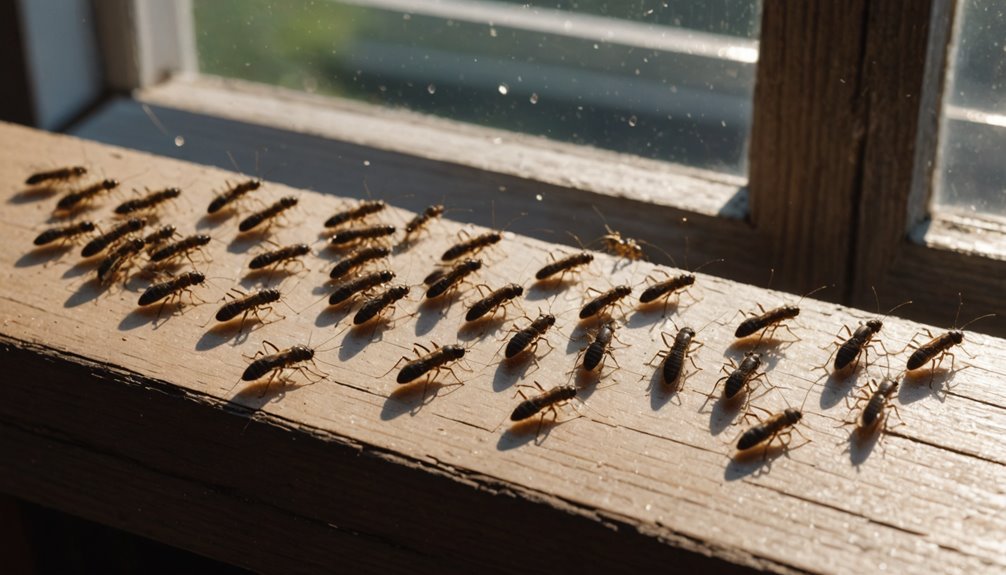
One of the clearest warning signs termites can give you happens right in plain sight, a swarm of winged insects clustering near your windows and doors.
These are swarmers, winged reproductive termites leaving a mature colony to start new ones. Because they’re drawn to light, they concentrate at glass, frames, and sills. If you’re finding them inside, that typically means the colony is already within your walls, not just somewhere outside nearby.
After landing, swarmers shed their wings, leaving small piles near windowsills, baseboards, and door frames. Swarming events themselves are brief, often lasting under an hour.
Don’t sweep them away. Save them in a sealed bag so a professional can confirm the species.
Avoid spraying insecticide as your first move, contact sprays kill the swarmers but leave the colony untouched.
Instead, record exactly where you found them, check nearby wood for hollow sounds or mud tubes, and schedule a professional inspection promptly.
Termite Mud Tubes on Your Foundation and What They Mean
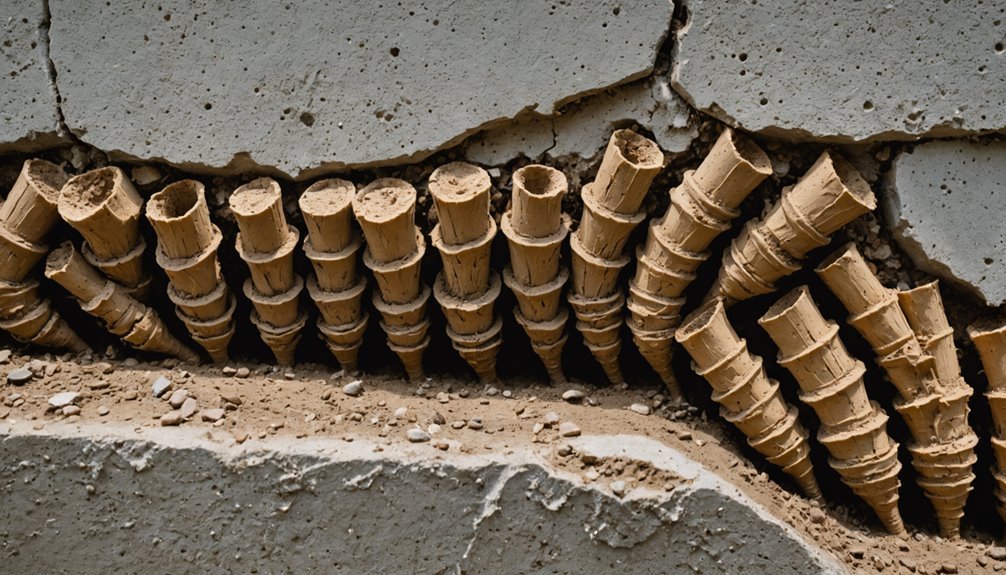
If you spot narrow, pencil-thin tunnels made of soil and wood particles running up your foundation wall, you’re likely looking at termite mud tubes.
You’ll want to check common locations like basement walls, crawl spaces, and exterior concrete, then break a tube open to see whether live termites are inside, which confirms an active infestation.
From there, you can decide whether to monitor for repairs to the tube within 24–48 hours or call a professional for a full inspection. Subterranean termites build these tubes using soil, wood particles, feces, and saliva to maintain moisture and protection while traveling between their colony and food sources.
Identifying Mud Tube Locations
Mud tubes on your foundation are one of the clearest early signs that subterranean termites have found a path into your home.
Check where the soil meets your foundation, since termites build these pencil-thin, brown tubes upward from the ground toward sill plates and wood framing.
You’ll also want to inspect crawl spaces, basement walls, and areas behind stoops or attached slabs, where tubes often go unnoticed.
Pay attention to tube direction and pattern. A single vertical tube usually signals movement between soil and wood, while a branching network suggests termites are searching for new food sources.
Use a flashlight in low-visibility areas, and look near foundation cracks, since those often reveal the exact entry points termites are exploiting. Not all mud tubes signal an active infestation, as tubes may remain long after termites have vacated or been eradicated.
Active Versus Inactive Tubes
Once you’ve located mud tubes on your foundation, the next step is figuring out whether they’re still in use. Active tubes tend to look moist, darker in color, and structurally smooth. You might even spot live termites inside after breaking one open.
Inactive tubes, by contrast, look dry, cracked, lighter in color, and often dusty.
To test for activity, carefully break a small section of the tube and check back within a few days. If termites repair it, the colony’s still active. No rebuilding over repeated checks suggests abandonment.
Keep in mind that inactive tubes don’t guarantee termites are gone—they may have simply shifted routes.
Either way, a professional inspection remains essential, since termites can seal old tubes and build new ones elsewhere. Experts can also use moisture meters and thermal imaging to detect hidden termite activity that isn’t visible to the naked eye.
What To Do Next
Finding a mud tube on your foundation means you need to act quickly—don’t brush it off as minor. Photograph the tube, note its location, and mark it on a simple floor plan so you or a professional can reference it later.
Trace the tube downward to find where it meets the soil—that’s your most likely entry point. On slab foundations, check nearby cracks and expansion joints for additional access routes.
From there, schedule a professional termite inspection. You can document and investigate on your own, but only a trained inspector can confirm how far the infestation extends and recommend the right treatment.
The sooner you get an expert involved, the better your chances of limiting structural damage.
How to Test Wood for Hidden Termite Damage
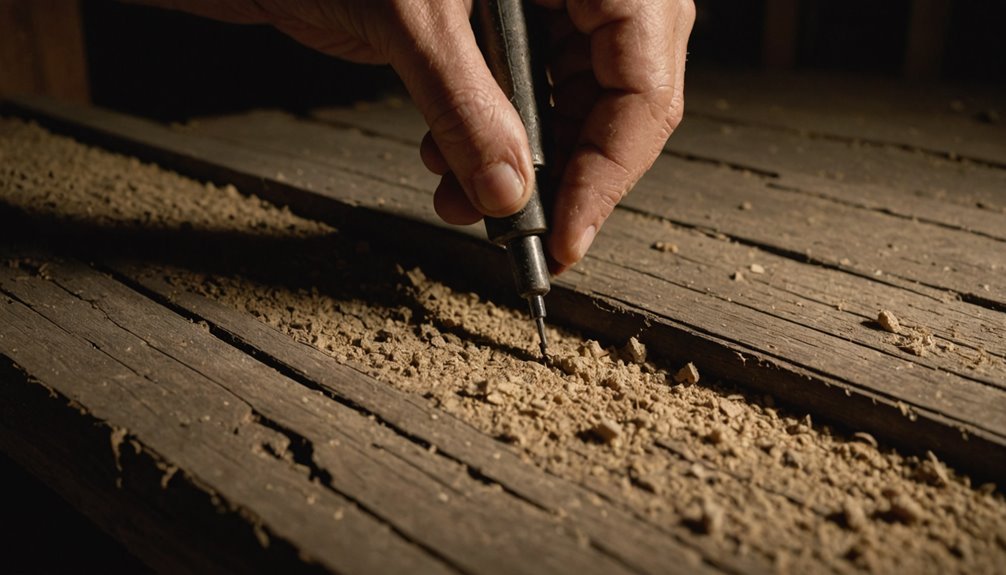
Testing wood for hidden termite damage relies on two core techniques: sounding and probing.
To sound wood, tap it every 6–12 inches using a flat-head screwdriver. Healthy wood sounds sharp and solid; damaged wood sounds dull or hollow. Work in a quiet environment and listen closely, since subtle differences can be easy to miss.
When you find a hollow-sounding spot, follow up by probing it. Press a screwdriver tip or ice pick into the suspect area at a slight angle. Healthy wood resists the tool; termite-damaged wood gives way with little resistance. Visible tunnels or voids inside confirm internal feeding.
Focus your testing on high-risk zones first, basement joists, crawl space beams, door and window frames, and any ground-contact wood.
Compare suspect areas against nearby healthy wood to better identify differences in sound and firmness. Neither technique alone is conclusive, so use both together.
Frass and Drywood Termite Droppings You Shouldn’t Ignore
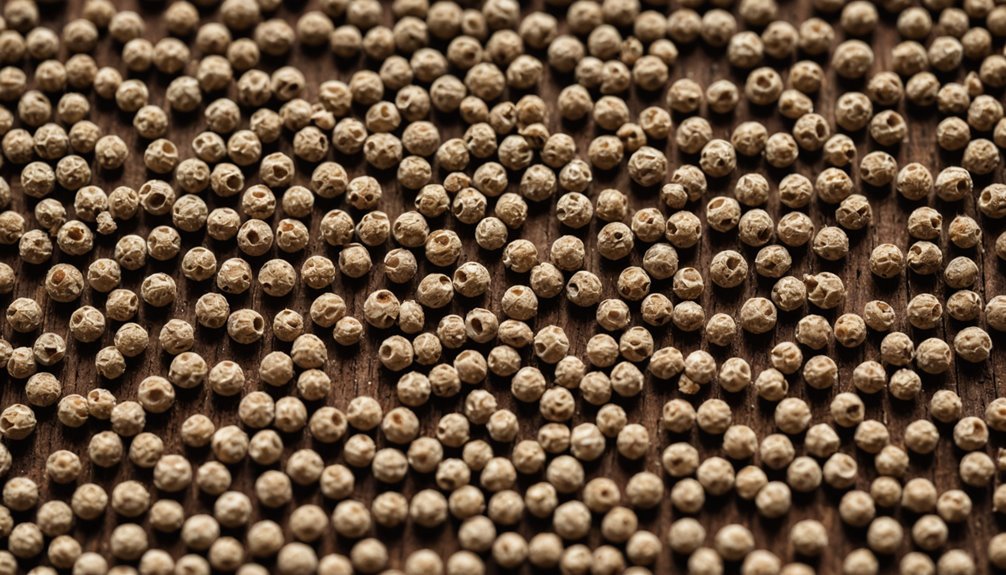
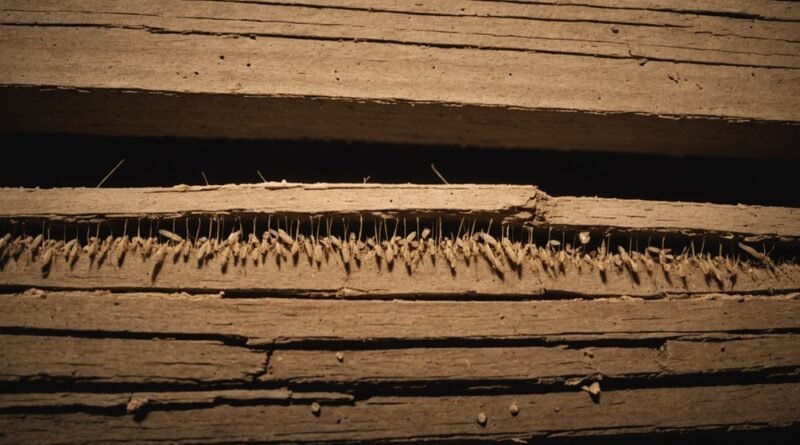
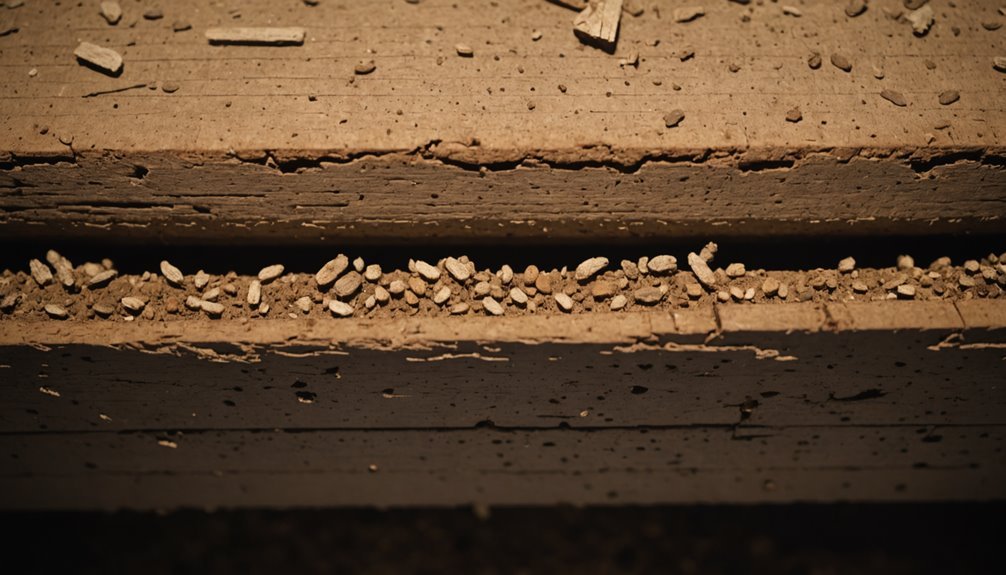
One of the earliest signs of a drywood termite infestation isn’t structural damage — it’s frass, the tiny fecal pellets termites push out of the wood as they feed. These pellets exit through kick-out holes roughly 1 to 2 millimeters wide, then pile up beneath floorboards, window sills, furniture, and attic beams.
Here’s what makes drywood frass distinctive:
- Shape and size: Pellets are about 1 millimeter long, oval, six-sided, and uniform in appearance.
- Color variation: Expect light tan to dark brown or black, depending on the wood consumed.
- Pile formation: Frass collects in small mounds, not scattered crumbs, directly below kick-out holes.
Don’t assume an active infestation just from pellets, old holes can drop frass long after termites leave.
Either way, avoid disturbing the area and schedule a professional inspection immediately.
Paint Bubbling, Warped Floors, and Stuck Doors Caused by Termites
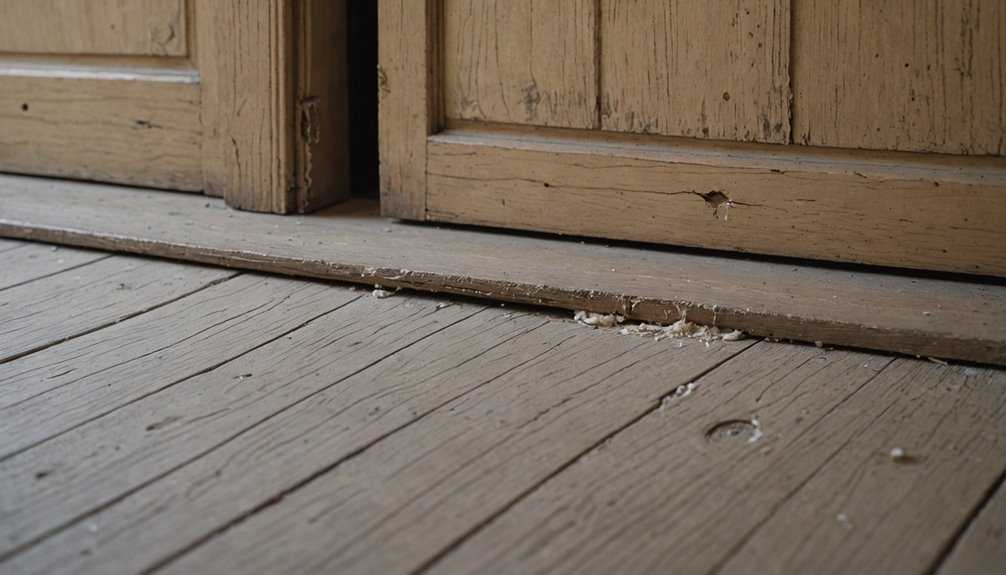
If you notice paint bubbling or peeling without an obvious water leak, termites may be feeding on the wood directly behind it.
You should also watch for warped, buckled, or blistered floors, since termites damage wood from the inside out, often leaving floors squeaky or hollow-sounding before you spot visible surface changes.
Doors and windows that suddenly stick or won’t close properly can signal that termites have weakened and warped the surrounding frame wood.
Paint Bubbling From Termites
Bubbling or peeling paint can be an early warning sign of termites, though it isn’t proof on its own. As termites consume wood, they create moisture that pushes against the painted surface, causing blistering, bubbling, or cracking.
Since leaks and condensation produce the same effect, you’ll need to look for additional clues before drawing conclusions.
Pay attention to where the bubbling appears. Damage near baseboards, sill plates, or floor level points more strongly toward termite activity than bubbling high on a wall.
Look for these supporting signs nearby:
- Soft or hollow-sounding wood behind the affected surface
- Mud tubes along the foundation or interior walls
- Pin-sized holes in drywall filled with soil
Don’t repaint the area until you’ve ruled out termites completely.
Floors Warping and Buckling
Warped or buckling floors often go hand in hand with the same termite activity that causes paint to bubble on nearby walls. When termites hollow out subflooring and joists, the structure loses its rigidity, causing the surface above to warp, sag, or buckle.
You might notice soft or springy spots underfoot, gaps forming between boards, or an uneven surface that wasn’t there before.
Try tap testing suspected areas with a screwdriver handle. A hollow or papery sound signals internal wood loss, even when the surface looks intact.
Pay close attention to kitchens, crawl spaces, and rooms near exterior doors, since moisture-prone areas attract termites. If you spot mud tubes near your foundation or skirting boards alongside floor deformation, treat it as a serious warning sign.
Stuck Windows and Doors
Stuck windows and doors rank among the subtler early signs of termite damage, yet they’re easy to dismiss as seasonal wood expansion. Termites hollow out wood from the inside, weakening frames and shifting them out of square.
Moisture from their activity accelerates warping, making hardware bind and surfaces distort.
When sticking becomes frequent, check for:
- Frass or tiny holes near windowsills and door frames
- Hollow or papery sounds when you tap surrounding wood with a screwdriver handle
- Mud tubes along foundation-adjacent walls near openings
If repeated sticking pairs with any of these signs, you’re likely dealing with active damage rather than ordinary humidity.
Don’t ignore it—call a licensed pest-control professional for a thorough inspection before structural damage worsens.
Squeaky Floors and Drywall Damage That Point to Termites
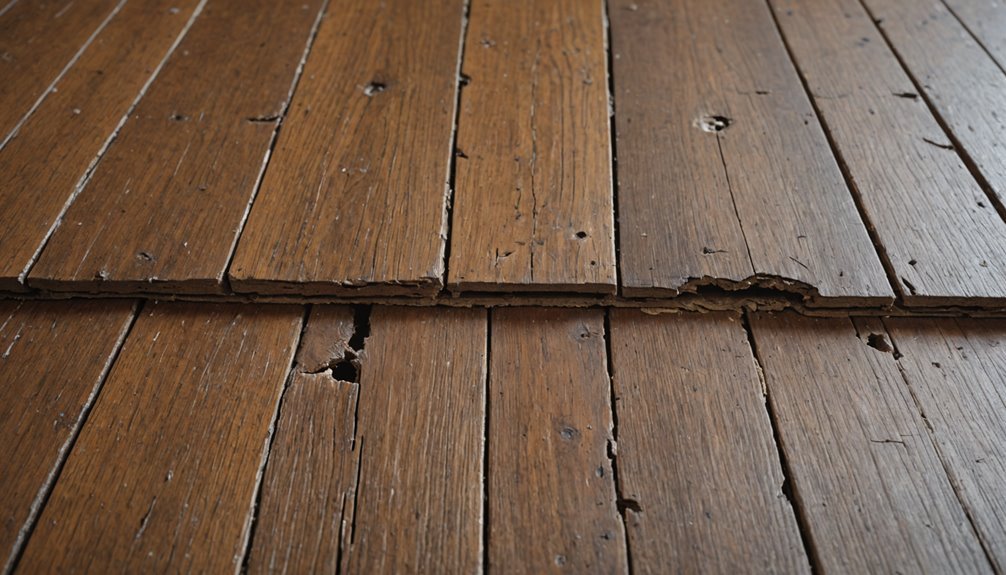
When your floors start squeaking more than usual, termites could be the cause. These insects attack the softer structural timbers beneath your visible floor surface, including joists and subflooring, weakening the supports enough that ordinary foot traffic triggers excessive creaking.
If that squeaking comes with a hollow sound when you tap nearby wood, your concern should increase, since termites leave cavities inside wood while keeping the outer surface intact. As damage advances, you may also notice sagging, buckling, or loose floorboards.
Your walls can reveal the same hidden destruction. Discolored or drooping drywall, small pinpoint holes, or maze-like patterns on surfaces often signal termite galleries eating away at the wood structure behind the wall.
Walls that bow or crack without any obvious water damage are especially suspicious. Since termites work from the inside out, these floor and wall symptoms frequently appear before the infestation becomes clearly visible.
When to Call a Professional for a Termite Inspection
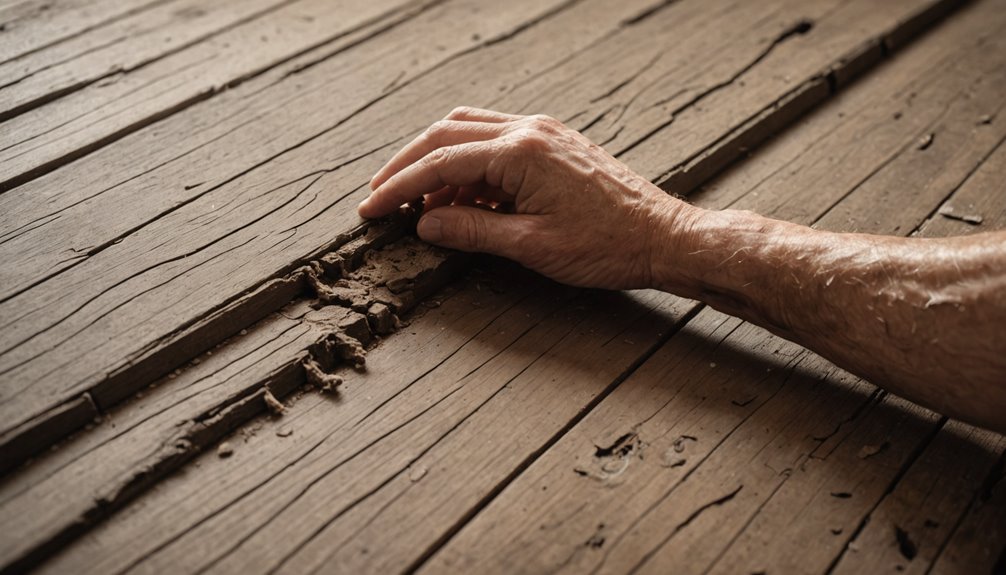
Knowing when to call a professional can mean the difference between a manageable treatment and costly structural repairs. If you spot any early warning signs, don’t wait to act.
Call immediately if you notice:
- Mud tubes on your foundation or walls, discarded wings near entry points, or frass resembling sawdust near wood surfaces.
- Hollow-sounding wood, visible termites indoors, or moisture readings above normal levels in your walls or trim.
- Recurring termites after DIY treatment, warped doors or windows, or damage spreading across multiple areas.
Even without visible damage, you should schedule annual inspections, since professional detection methods catch hidden activity before it becomes expensive.
Older homes and high-risk environments may need checks more than once a year. Late spring or summer is an ideal time, as colonies often swarm when temperatures rise.
Early action protects your home’s structure and your budget.
Frequently Asked Questions
Can Termites Spread From a Neighbor’s Property to Mine?
Yes, termites can spread from your neighbor’s property to yours. They’ll travel underground, through soil, and via mud tubes, crossing property lines to find new wood sources in your home’s foundation or structure.
How Long Does a Termite Colony Take to Cause Serious Damage?
A termite colony can cause serious damage to your home within 3 to 8 years, but under favorable conditions, an established colony can destroy significant structure in just 2 to 3 months.
Are Certain Wood Types More Resistant to Termite Infestations?
Yes, certain woods resist termites better. You’ll find cedar, redwood, teak, and mahogany naturally deter termites through oils and density. However, no wood’s completely termite-proof, especially when it’s moist or in direct soil contact.
Do Termite Infestations Affect Homeowners Insurance Coverage or Claims?
Termite infestations typically don’t affect your coverage positively—insurers usually deny claims since they’re considered preventable maintenance issues. If you’ve neglected inspections or delayed treatment, you’ll likely face rejection regardless of how extensive the damage is.
Can Cold Weather Kill an Active Termite Colony Inside Your Home?
Cold weather typically won’t kill an active termite colony inside your home. Your heated walls, soil, and enclosed spaces protect termites from freezing temps, letting them keep feeding and reproducing throughout winter.
Conclusion
Early detection is your best defense against costly termite damage. Now that you know what to look for—mud tubes, swarmers, frass, and structural changes—you can catch infestations before they spiral out of control. Don’t wait until damage becomes obvious. Walk your home’s perimeter regularly, check vulnerable wood, and trust your instincts if something seems off. If you’re spotting any of these warning signs, it’s time to call a professional immediately.