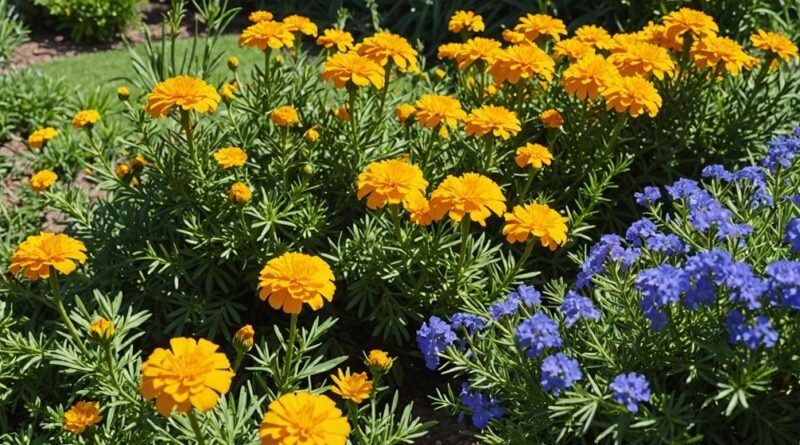
Plants That Repel Termites: What Works
Several plants can make your home less appealing to termites, though none will stop an infestation on their own. Catnip, vetiver grass, chrysanthemums, neem, and eucalyptus are among the strongest options, each containing compounds that termites actively avoid. Garlic, mint, lemongrass, and marigolds round out a solid plant-based strategy. Where and how you position them around your foundation matters just as much as which plants you choose and there’s a lot more to unpack on both fronts.
Which Compounds in Termite-Repelling Plants Actually Work?
Understanding these compounds helps you make smarter choices.
Whole plants offer diluted effects, while concentrated essential oils and extracts deliver the active chemistry at levels that actually matter. Vetiver grass contains vetivone, a primary chemical compound responsible for its insect-repelling properties.
The Best Plants That Repel Termites
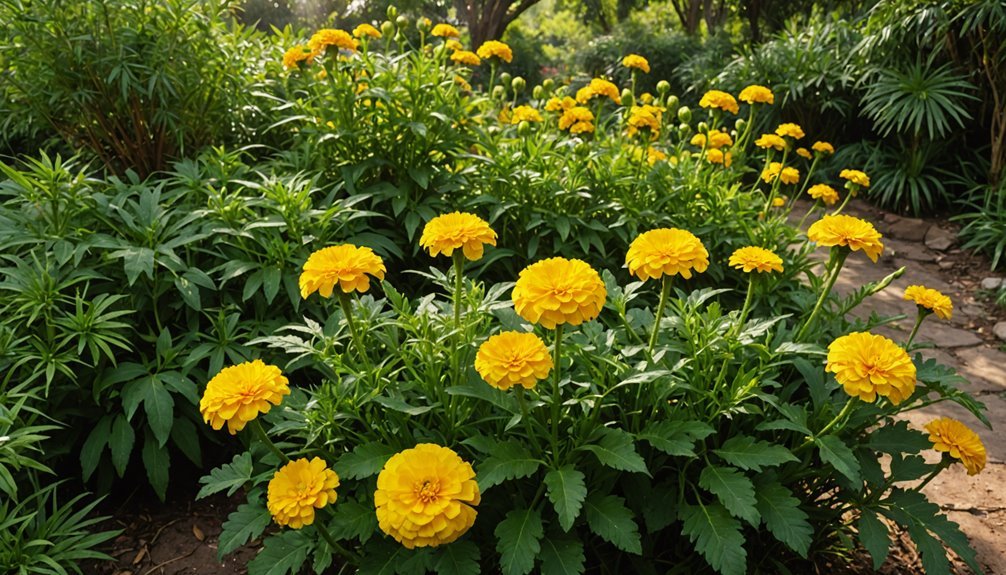
While no plant guarantees full termite protection, several stand out as the most promising options for landscape-based deterrence.
Catnip ranks among the strongest, with Terminix specifically noting its performance in lab studies. Vetiver grass also shows study-backed promise and works well as an ornamental landscape deterrent.
Catnip leads the pack, backed by Terminix lab studies, while vetiver grass doubles as a study-supported ornamental deterrent.
Garlic’s sulfur compounds make it a consistently cited option, though evidence remains insufficient for whole-home protection.
Lemongrass, mint, and marigold appear frequently in pest-management planting schemes due to their strong aromatic profiles, though support is mostly anecdotal.
Neem and eucalyptus round out the top options, with neem often described as one of the more effective choices in consumer summaries. Chrysanthemums contain naturally occurring pyrethrins that termites actively avoid, making them a visually appealing addition to a pest-deterrent garden.
Use these plants as supportive layers in your pest strategy, not replacements for professional termite control.
Where to Plant Termite-Repelling Plants Around Your Home
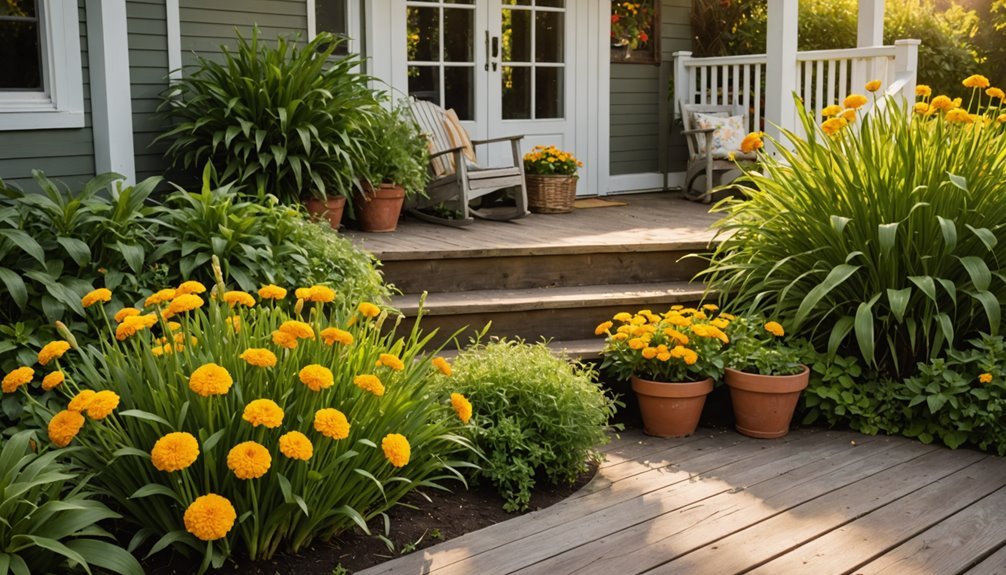
Placement matters as much as plant selection when using vegetation to deter termites. Focus your planting strategy on the home’s perimeter, especially where termite access risks are highest.
Maintain a 3-foot gap between plants and the foundation to reduce moisture buildup and preserve inspection access.
Prioritize these four placement zones:
- Entry points – Plant near doors, windows, and vents where termites most likely enter.
- Foundation perimeter – Use continuous or double rows along long foundation runs for broader coverage.
- Corners and transitions – Repeat plantings where walls change direction, since termite routes concentrate there.
- Wood-soil-moisture intersections – Target spots where these three conditions overlap, as they favor termite activity most.
Avoid low-drainage areas, and keep mulch 6 to 12 inches away from the foundation. Consider planting vetiver grass along sloped areas near the foundation, as its deep root system deters subterranean termites while also protecting the soil from erosion.
How to Layer Termite-Repelling Plants Into a Perimeter Strategy
Knowing *where* to plant gets you started, but knowing *how to layer* those plants turns a scattered perimeter into a coordinated defense.
Think in three zones rather than a single row. Place vetiver as your outer barrier its dense root mass makes it a strong front-line deterrent.
Don’t plant in a single row think in zones, starting with vetiver as your outermost line of defense.
Behind it, run a middle band of lemongrass or marigolds to create an aromatic disruption zone.
Closest to your structure, use garlic, mint, or catnip in dense plantings or contained pots near entry points and wood-contact areas.
Each layer serves a different function, so placement should be intentional. Dense coverage matters more than variety alone, since gaps weaken the entire system.
Combine the layers, maintain them seasonally, and you’ll have a perimeter that actually works. Keep at least a 3-foot gap between your plantings and the foundation to improve airflow and reduce the moisture that termites depend on.
What Termite-Repelling Plants Can and Can’t Do
Termite-repelling plants carry real potential, but that potential has clear limits you need to understand before relying on them.
Here’s what the evidence actually supports:
What they can do:
- Deter termites in small-scale studies, particularly catnip and vetiver grass.
- Produce repellent compounds like nepetalactone, nootkatone, and azadirachtin that make nearby soil less attractive to termites.
- Reduce termite activity around garden and landscaped areas when used consistently.
- Strengthen a broader prevention strategy when combined with other deterrence methods.
What they can’t do:
- Replace professional termite treatment.
- Reliably protect an entire home or structure.
- Stop an active infestation.
- Guarantee long-term results, since most plants lack sufficient field research to support definitive efficacy claims.
For moderate to severe infestations, professional termite services like HiCare use eco-friendly chemicals and offer free inspections along with warranty options to ensure complete elimination.
Frequently Asked Questions
Can Termite-Repelling Plants Harm Pets or Children if Ingested?
Yes, many termite-repelling plants can harm your pets or children if ingested. Castor plant, garlic, eucalyptus, and neem pose the highest risks, causing toxicity, gastrointestinal upset, or worse depending on quantity consumed.
Do Termite-Repelling Plants Work Against All Termite Species?
No, termite-repelling plants don’t work against all species. You’ll find catnip and vetiver target Formosan termites, neem tackles Macrotermes, and citrus oils combat O. obesus, but no single plant repels every termite species.
How Long Does It Take for These Plants to Show Results?
You’ll typically see results within days for fermented or extracted plant treatments, but effects usually last only 2–4 weeks. You’ll need to reapply monthly, or sooner if heavy rain occurs.
Can Termite-Repelling Plants Survive in Cold or Dry Climates?
Some plants can survive in your climate, but it depends on the species. You’ll find lavender and vetiver thrive in dry regions, while catnip, mint, garlic, and oregano handle cold climates better.
Should Termite-Repelling Plants Be Combined With Professional Pest Treatments?
You should combine termite-repelling plants with professional pest treatments, but don’t rely on plants alone. They’ll add a landscaping layer of deterrence, while professional treatment targets the infestation directly at the colony level.
Conclusion
You’ve now got a solid grasp of which plants can help deter termites and how to use them strategically around your home. Remember, they’re a smart layer of protection, not a standalone fix. Combine them with regular inspections, moisture control, and professional treatments when needed. Plant smart, stay consistent, and you’ll make your property a much less inviting target for termites.