Does Salt Kill Termites? What It Can (and Can’t) Do.
Salt can kill termites on contact by pulling moisture from their bodies through osmotic stress, leading to dehydration and death. You can use it as a barrier around your home’s foundation to discourage termite movement, but it won’t eliminate a full infestation. It can’t reach deep subterranean colonies or kill the queen. If you’re dealing with a serious termite problem, there’s a lot more you should know before choosing your next step.
Does Salt Actually Kill Termites?
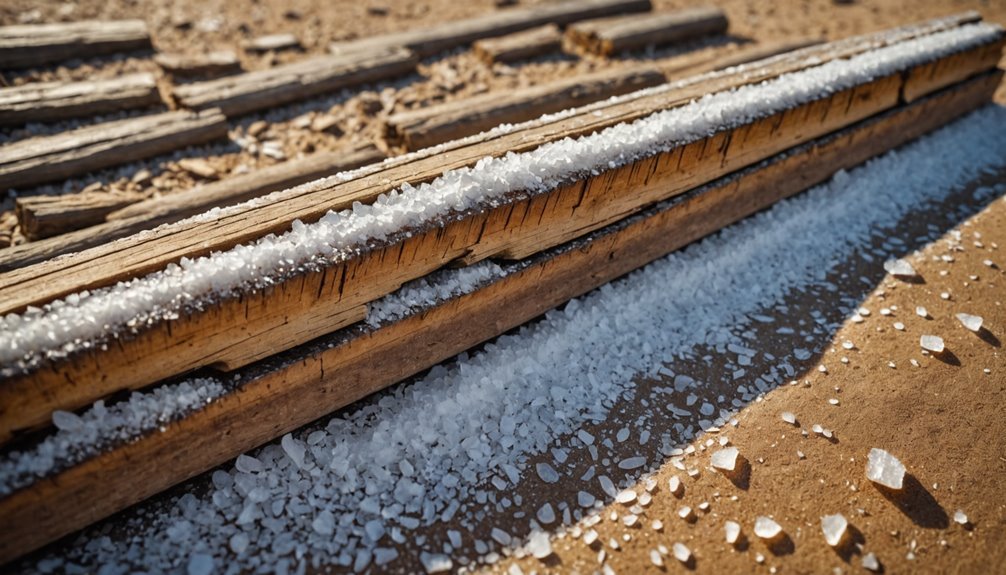
Salt can kill termites, but only under specific conditions. When termites come into direct contact with salt, they lose moisture through their bodies, which leads to dehydration and death. Sodium chloride is the form most commonly referenced in pest-control discussions, and some sources do describe it as insecticidal in certain situations.
However, you shouldn’t expect salt to eliminate an entire infestation. It may kill a few individual termites on contact, but it won’t reach a subterranean colony living deep inside your walls or soil.
Effectiveness also depends on concentration, application method, and exposure time. The scientific evidence supporting salt as a reliable termite control method remains limited, making it an inconsistent option rather than a dependable standalone solution. Termites damage 600,000 homes annually in the U.S., costing over $5 billion, which highlights why relying on salt alone is unlikely to be sufficient for serious infestations.
How Salt Dehydrates Termites on Contact
When salt makes direct contact with a termite’s body, it triggers osmotic stress, pulling moisture out through the insect’s surface rather than poisoning it chemically. The salt draws water across the termite’s tissues, steadily stripping the fluids its cells need to function.
As dehydration worsens, movement slows, physiological activity drops, and bodily processes begin shutting down. This isn’t an instant kill. The effect is cumulative, meaning longer exposure pulls more moisture and increases lethality.
Concentrated solutions work harder because stronger saline creates greater osmotic pressure. A common approach is mixing salt and warm water at a 1:3 ratio until fully dissolved, then spraying it directly onto termites or into cracks where they travel.
The more thoroughly the solution coats the insect, the faster dehydration progresses. Termites can also be killed through ingestion of salt, as sodium and chloride ions absorb bodily fluids from within.
Why Salt Works Better as a Barrier Than a Killer
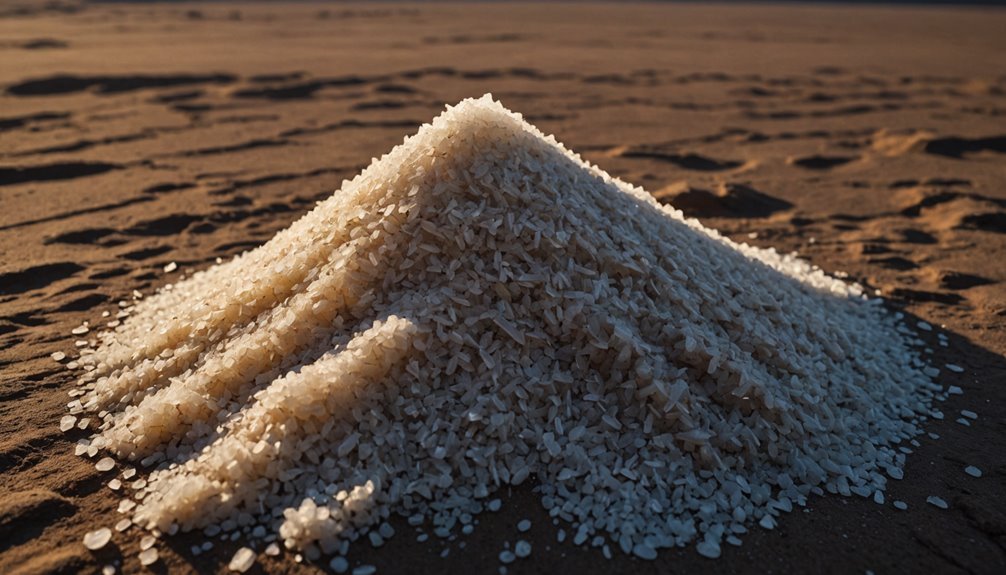
While salt can kill termites on contact, it works better as a barrier than as a colony killer, and the reason comes down to access. Termites live deep inside wood, soil galleries, and concealed voids, so getting salt to enough workers to impact the colony is nearly impossible. Scattered contact only affects individual insects, not the infestation as a whole.
A barrier works differently. Instead of chasing termites into inaccessible spaces, you place salt where they must cross it, foundation edges, cracks, crawlspace perimeters, and entry points.
Termites are sensitive to salinity and moisture imbalance, so they’ll avoid high-salt zones rather than push through them. That avoidance is what makes a perimeter treatment effective. You’re disrupting their movement before they reach the structure, which is far more practical than hunting a hidden colony. When termites do come into direct contact with salt, it draws moisture from their bodies, causing dehydration that can be lethal.
The Right Way to Use Salt Against Termites
Knowing that a salt barrier works better than direct contact treatment changes how you should approach application.
Start by dissolving salt in warm water using a 1:3 ratio, stirring until fully dissolved. Pour the solution into a clean spray bottle or syringe for targeted use.
Dissolve salt in warm water at a 1:3 ratio, then transfer the solution to a spray bottle or syringe.
Spray the solution along foundation crevices, wooden structures, and visible termite tunnels. Use a syringe to inject directly into entry points.
Sprinkle dry salt around your home’s perimeter, focusing on cracks and gaps. You can also fill ground voids near the house with rock salt and water to create a deeper barrier.
Reapply daily to maintain effectiveness. Keep in mind that beneficial organisms in the surrounding soil can be harmed by overuse of salt treatments.
How Much Salt You Need for a Termite Barrier
When building a salt barrier, you’ll need a concentrated mix most sources point to ratios ranging from 1:1 to 1:3 salt to warm water, though no universal standard exists.
You should apply the solution directly into cracks, gaps, and entry points rather than spreading a thin line across the soil surface.
For dry barriers, place the salt at a depth that keeps it in contact with termite pathways, focusing on spots where soil meets wood or concrete. Saltwater can deter termites from entering structures by drawing moisture out of their bodies and disrupting their ability to move through treated zones.
Salt Concentration Requirements
If you’ve seen DIY recommendations online, you’ve probably noticed they don’t agree on how much salt to use. Some sources suggest a 1:3 salt-to-water ratio for spraying directly on infested areas, while others recommend equal parts salt and warm water.
Neither figure comes from controlled research or a recognized pest management standard.
The phrase “high salt concentration” appears in some sources, but without a specific number attached to it. Patent descriptions reference salt-laden soil as the repellent medium without giving a household-friendly measurement.
No source specifies whether you should measure by weight or volume either.
The bottom line: there’s no authoritative concentration standard for a reliable salt barrier. What you’ll find are informal, inconsistent recipes with no field-tested backing.
Barrier Placement Depth
Even if you’re committed to trying a salt barrier, the question of how deep to place it has no clean answer in the salt-treatment world. Established chemical barriers typically range from 6-inch-deep trenches to 24-inch-deep installations, with the required depth depending on the treatment product and site conditions.
Sand barriers typically require only a 4–6 inch trench, while liquid treatments may require rodding down to the footing, sometimes 30 inches or more. The deeper you go, the more material you need, and professional liquid termiticide labels generally scale their application rate to trench depth, so a deeper barrier calls for proportionally more product.
Since no verified salt-specific depth standard exists, you’d be guessing at placement depth, which undermines any barrier’s effectiveness from the start.
Where Salt Fails Against Deep Termite Colonies
While salt may eliminate a handful of termites at the surface, it can’t touch the deeper colonies that pose the greatest structural threat. Subterranean termites nesting six inches or more below ground remain completely unaffected because saltwater simply can’t migrate through dense soil to reach them.
You’re also dealing with the fact that termites naturally avoid high-salt areas, so they’ll reroute rather than retreat.
Even if you apply salt directly to wood, it penetrates only one to two inches before stopping. Large, established colonies with thousands of individuals absorb minimal mortality from that kind of limited exposure.
Surviving members quickly repopulate treated zones, and since salt doesn’t disrupt reproductive cycles or eliminate the queen, you’re left with a reinfestation problem rather than a solution.
How Salt Compares to Orange Oil, Borates, and Other Treatments
When you compare salt to orange oil, borates, and other treatments, the differences in direct kill performance and barrier effectiveness become clear fast.
Orange oil kills termites on contact, borates disrupt digestion and protect wood over time, and bait systems target entire colonies while salt struggles to reliably kill even exposed termites within a reasonable window.
You’re essentially stacking a limited, inconsistent option against treatments that each offer stronger, more defined results in either immediate kill power or long-term protection.
Direct Kill Performance
If you’re considering salt as a termite killer, it helps to see how it stacks up against better-documented options like orange oil, borates, and other contact treatments.
Each works through direct contact, but they’re not equally supported:
- Salt draws moisture from termites’ bodies, but scientific evidence is sparse and termite tolerance isn’t well studied.
- Orange oil contains d-limonene, which damages exoskeletons and causes dehydration, it has a clearer active compound than salt.
- Borates/boric acid are more recognized as spot treatments and are frequently recommended for targeted wood surfaces.
- Other options like diatomaceous earth, vinegar, and soap-and-water solutions also kill on contact but share the same limitation, none eradicates a full infestation.
Salt is the least evidence-backed of these options.
Barrier Effectiveness Compared
Salt may stop a few termites at entry points, but it doesn’t come close to matching the barrier strength of professional soil termiticides, borates, or even orange oil.
Soil termiticides create a continuous treated zone throughout the soil, offering whole-structure protection that salt simply can’t replicate.
Borates go further by penetrating wood directly, disrupting termite digestion and making treated surfaces unappealing long-term.
Orange oil targets termites on contact in localized spots, similar to salt, but it’s backed by clearer practical application guidelines.
Salt washes away with moisture, requires frequent reapplication, and can damage nearby vegetation.
If you’re relying on salt as your primary barrier, you’re leaving most of your structure exposed.
It works best as a temporary, supplemental measure, not a standalone solution.
Does Salt Treatment Harm Your Soil or Plants?
Using salt to kill termites can absolutely damage your soil and plants if you’re not careful about where and how you apply it.
Salt disrupts soil structure, reduces water infiltration, and creates conditions where plants can’t absorb moisture effectively. Here’s what happens when salt builds up in treated areas:
Salt buildup in treated soil disrupts structure, blocks water infiltration, and prevents plants from absorbing the moisture they need.
- Salt pulls water away from plant roots through osmotic pressure, essentially dehydrating them.
- Excess sodium breaks down soil aggregates, causing compaction and poor drainage.
- High salt concentrations prevent seeds from germinating in treated zones.
- Accumulated salts require deliberate leaching with heavy watering to flush them from root zones.
To prevent long-term salinization, apply salt precisely, avoid garden beds, and monitor treated areas regularly for plant stress signals.
When to Skip Salt and Call a Professional
While salt has a place in minor, targeted termite control, there are clear situations where it simply won’t cut it. If you’re seeing mud tubes, discarded wings, sagging wood, or hollow-sounding framing, the infestation likely runs deeper than salt can reach.
Salt only works on direct contact, so it can’t penetrate wall voids, subfloors, soil colonies, or areas behind drywall. If termites have spread across multiple rooms or reached load-bearing structures, a localized application won’t address the colony.
Repeat DIY failures are another warning sign that you need a stronger approach. Call a professional when damage is widespread, entry points are inaccessible, or you’re unsure of the species or extent. Delaying real treatment risks serious structural damage.
Frequently Asked Questions
Can Salt Prevent Termites From Returning After Professional Treatment?
You shouldn’t rely on salt to prevent termites from returning after professional treatment. It can’t penetrate deep into wood or soil, loses effectiveness in humidity, and has no documented success rate against re-infestation.
Are Certain Termite Species More Resistant to Salt Than Others?
Resistance does appear to vary by species. Some drywood termites, which naturally tolerate drier conditions and occasionally coastal or island habitats, have shown more tolerance to saline exposure in limited studies than subterranean species like Coptotermes formosanus and Reticulitermes, which tend to show higher mortality when exposed to salt solutions. That said, species-level saline-tolerance data is thin and not standardized across studies, so treat this as a general pattern rather than a number you can plan a treatment around.
Is Salt Safe to Use Around Pets and Children?
Plain table salt is low in toxicity, but it isn’t risk-free. Piles of dry rock salt or concentrated saltwater left within reach can irritate paws and skin, and pets that ingest a significant amount of salt can develop sodium ion poisoning, with symptoms like vomiting, diarrhea, lethargy, and excessive thirst. To stay safe, apply salt only into targeted cracks, entry points, and foundation lines rather than open ground pets or kids can access, keep dry piles covered or out of reach, and call a vet promptly if a pet shows symptoms after exposure.
Does Mixing Salt With Other Natural Repellents Improve Termite Control?
Mixing salt with natural repellents like orange oil, neem oil, boric acid, or vinegar won’t improve your termite control results. You’ll find each remedy works best on its own, without salt additives.
How Long Does a Salt Barrier Remain Effective Before Reapplication Is Needed?
Your salt barrier’s effectiveness varies widely. Engineered, high-concentration salt barriers built under controlled industrial conditions have been documented to remain stable for a long time, but that’s a poor comparison for a DIY sprinkle or spray in your yard. In practice, expect a home salt barrier to weaken within days, especially after rain or watering, since no established reapplication schedule exists for DIY use.
Can Salt Treatments Affect the Structural Integrity of Concrete Foundations?
Yes, salt treatments can damage your concrete foundation. They’ll cause scaling, cracking, and increased permeability over time. Chloride ions can also corrode embedded steel reinforcement, ultimately reducing your foundation’s load-carrying capacity and structural integrity.
Conclusion
You’ve seen how salt can work against termites, but it’s not a cure-all. It’ll help create a surface barrier and dehydrate termites on contact, yet it won’t reach deep colonies or eliminate a serious infestation. You’re also risking soil and plant damage if you overdo it. Use salt as a supplementary measure, but don’t hesitate to call a professional when you’re dealing with an established termite problem.
{
“@context”: “https://schema.org”,
“@graph”: [
{
“@type”: “Article”,
“headline”: “Does Salt Kill Termites?”,
“description”: “Salt can kill termites on contact by pulling moisture from their bodies, but it won’t reach a subterranean colony or eliminate a full infestation. Learn how salt actually works, how to build a barrier correctly, where it falls short, and when to call a professional instead.”,
“image”: “https://termitecontrolcare.com/wp-content/uploads/2026/06/salt_kills_termites_selectively_gr76t.jpg”,
“author”: {
“@type”: “Organization”,
“name”: “Termite Control Care”
},
“publisher”: {
“@type”: “Organization”,
“name”: “Termite Control Care”,
“logo”: {
“@type”: “ImageObject”,
“url”: “https://termitecontrolcare.com/wp-content/uploads/termitecontrolcare-logo.png”
}
},
“datePublished”: “REPLACE-WITH-ACTUAL-ORIGINAL-PUBLISH-DATE”,
“dateModified”: “2026-08-28”
},
{
“@type”: “BreadcrumbList”,
“itemListElement”: [
{
“@type”: “ListItem”,
“position”: 1,
“name”: “Home”,
“item”: “https://termitecontrolcare.com/”
},
{
“@type”: “ListItem”,
“position”: 2,
“name”: “Does Salt Kill Termites?”,
“item”: “https://termitecontrolcare.com/salt-for-termites/”
}
]
},
{
“@type”: “FAQPage”,
“mainEntity”: [
{
“@type”: “Question”,
“name”: “Can Salt Prevent Termites From Returning After Professional Treatment?”,
“acceptedAnswer”: {
“@type”: “Answer”,
“text”: “Salt shouldn’t be relied on to prevent termites from returning after professional treatment. It can’t penetrate deep into wood or soil, loses effectiveness in humidity, and has no documented success rate against re-infestation.”
}
},
{
“@type”: “Question”,
“name”: “Are Certain Termite Species More Resistant to Salt Than Others?”,
“acceptedAnswer”: {
“@type”: “Answer”,
“text”: “Resistance does appear to vary by species. Some drywood termites, which naturally tolerate drier conditions, have shown more tolerance to saline exposure in limited studies than subterranean species like Coptotermes formosanus and Reticulitermes, which tend to show higher mortality when exposed to salt solutions. Species-level saline-tolerance data is thin and not standardized, so this is a general pattern rather than a precise benchmark.”
}
},
{
“@type”: “Question”,
“name”: “Is Salt Safe to Use Around Pets and Children?”,
“acceptedAnswer”: {
“@type”: “Answer”,
“text”: “Plain table salt is low in toxicity but not risk-free. Piles of dry rock salt or concentrated saltwater left within reach can irritate paws and skin, and pets that ingest a significant amount of salt can develop sodium ion poisoning, with symptoms like vomiting, diarrhea, lethargy, and excessive thirst. Apply salt only into targeted cracks and entry points rather than open ground pets or kids can access, and contact a vet promptly if a pet shows symptoms after exposure.”
}
},
{
“@type”: “Question”,
“name”: “Does Mixing Salt With Other Natural Repellents Improve Termite Control?”,
“acceptedAnswer”: {
“@type”: “Answer”,
“text”: “Mixing salt with natural repellents like orange oil, neem oil, boric acid, or vinegar doesn’t improve termite control results. Each remedy works best on its own, without salt additives.”
}
},
{
“@type”: “Question”,
“name”: “How Long Does a Salt Barrier Remain Effective Before Reapplication Is Needed?”,
“acceptedAnswer”: {
“@type”: “Answer”,
“text”: “Effectiveness varies widely. Engineered, high-concentration salt barriers built under controlled industrial conditions have been documented to remain stable for a long time, but that’s a poor comparison for a DIY sprinkle or spray in a yard. In practice, a home salt barrier should be expected to weaken within days, especially after rain or watering, since no established reapplication schedule exists for DIY use.”
}
},
{
“@type”: “Question”,
“name”: “Can Salt Treatments Affect the Structural Integrity of Concrete Foundations?”,
“acceptedAnswer”: {
“@type”: “Answer”,
“text”: “Yes, salt treatments can damage concrete foundations, causing scaling, cracking, and increased permeability over time. Chloride ions can also corrode embedded steel reinforcement, ultimately reducing a foundation’s load-carrying capacity and structural integrity.”
}
}
]
}
]
}