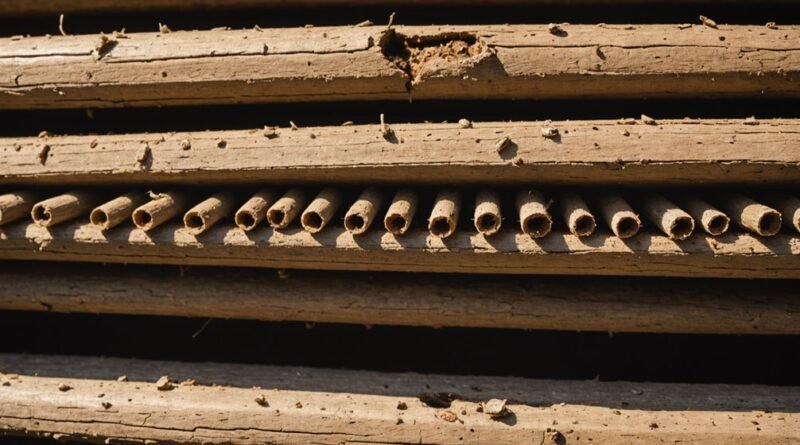
Can I Treat Termites Myself
You can treat termites yourself in many cases, but it depends on how bad the infestation is. If you’ve caught activity early near one entry point with no structural damage, DIY soil treatments, bait systems, or boric acid can be effective. But widespread damage, moisture complications, or returning activity usually calls for a professional. Keep going to find out exactly what works, what doesn’t, and when you’re in over your head.
Key Takeaways
- DIY termite treatment is possible for early, localized infestations using soil barrier treatments, bait systems, or boric acid powder.
- Trench around your foundation six inches wide and six to ten inches deep, then fill with diluted termiticide for subterranean termites.
- DIY products often provide temporary suppression only, failing to fully eliminate the colony or address hidden damage.
- Widespread activity, structural wood damage, or returning infestations signal the need for professional intervention immediately.
- Whole-house fumigation or heat treatments require licensed professionals and cannot legally be performed as DIY methods.
Signs You Have Termites and Not Ants
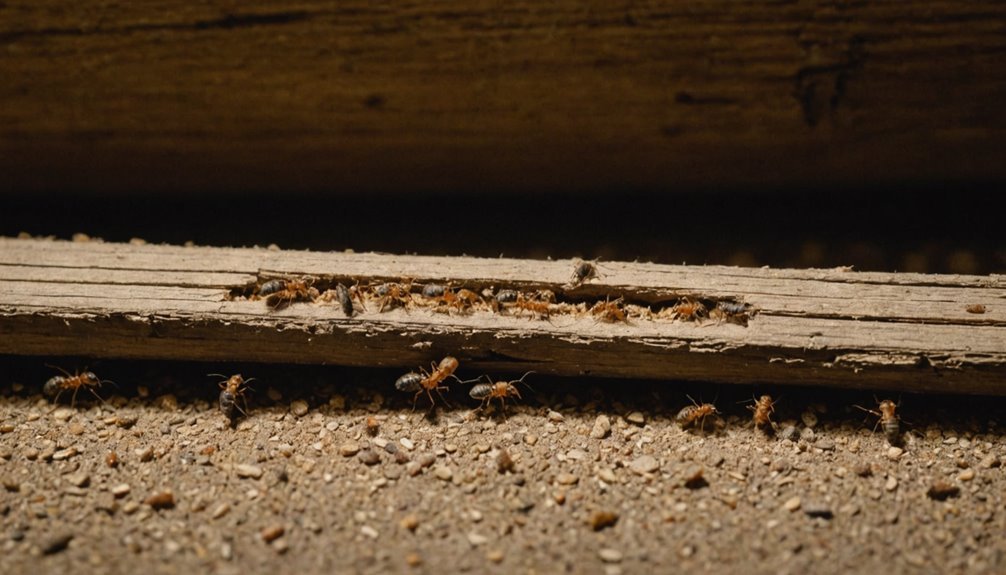
Before you treat termites yourself, you’ve got to make sure you’re actually dealing with termites and not ants. Check the body shape first: termites have a thick, straight body with no visible waist, while ants have a narrow, pinched middle.
Termite antennae are straight and bead-like; ant antennae are elbowed. If you spot discarded wings of equal length near windowsills or doors, that points strongly to termites.
Look at the wood damage too. Termites hollow wood from the inside, leaving mud-filled galleries. Carpenter ants excavate smooth tunnels and leave fibrous debris behind.
Mud tubes on walls or foundations, hollow-sounding wood, and small piles of grain-like frass are all signs you’re dealing with termites, not ants. Unlike carpenter ants, termite workers are transparent in color, making them harder to spot in the open.
How Bad Is Your Infestation Before You DIY?
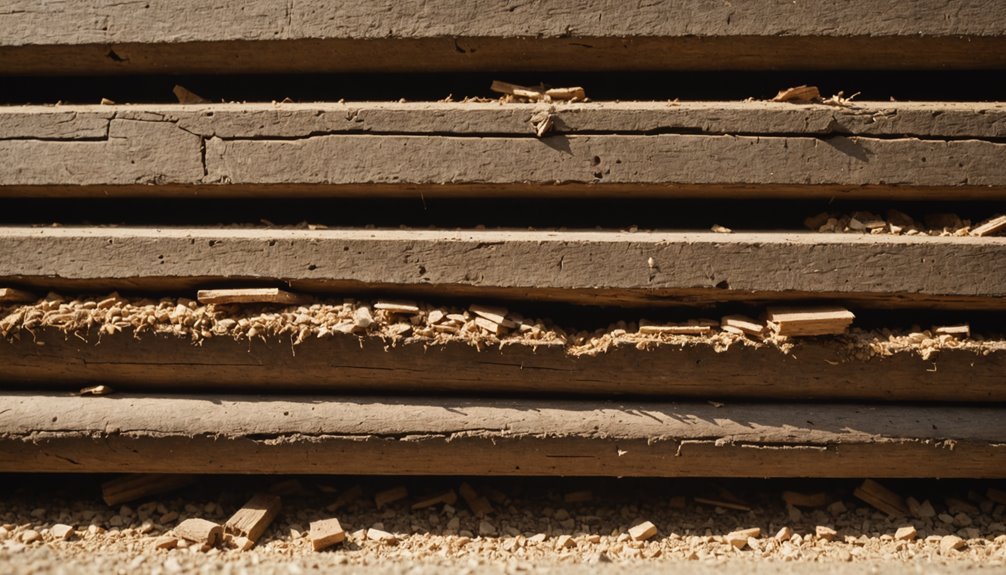
How bad your infestation actually is should determine whether you reach for a DIY product or pick up the phone.
If you’re catching activity early, near one entry point, with no structural damage yet, DIY has a reasonable shot.
But once you’re tapping wood and hearing hollow sounds, spotting mud tubes, or noticing doors and windows sticking, you’re likely dealing with more than a surface problem.
Widespread signs across your attic, crawl space, deck, and foundation mean the colony isn’t small or localized anymore.
DIY products, sprays, and repellents can suppress activity temporarily, but they won’t eliminate an established colony.
If moisture problems are also present, recurrence becomes almost certain.
The worse the spread, the less DIY delivers anything beyond short-term relief. A professional termite inspection provides a full home report and customized treatment plan that accounts for the true scope of the damage.
Can You Really Treat Termites Yourself?
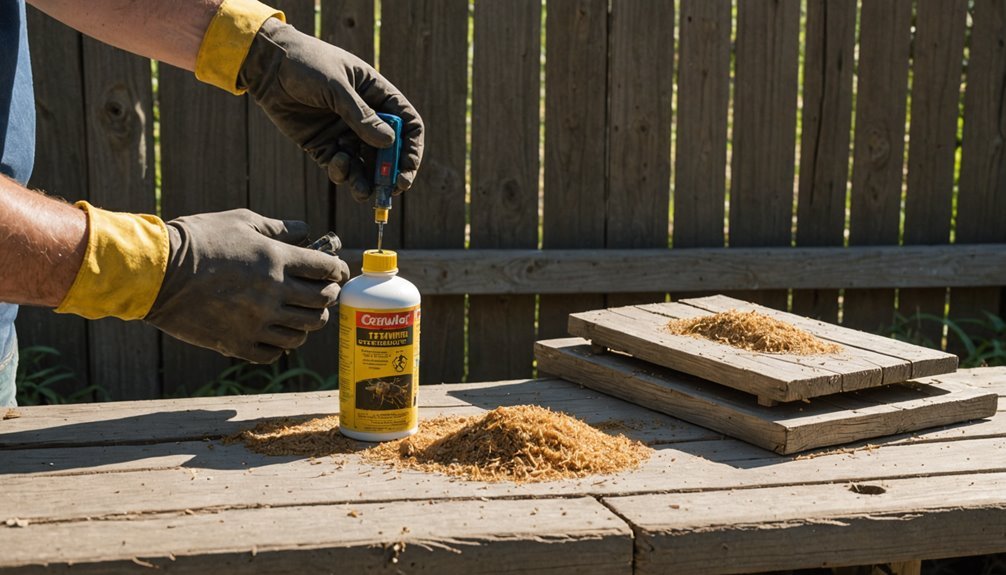
You can treat termites yourself in some situations, but it’s not a blanket solution for every infestation.
DIY methods work best for minor, localized problems where you can clearly identify and access the affected area.
When the infestation runs deeper (into wall voids, hidden galleries, or beneath the foundation), self-treatment often falls short of eliminating the colony. Infestations can go undetected for years, allowing colonies to grow far beyond what most DIY treatments can handle.
DIY Termite Treatment Realities
When you search for DIY termite treatment, you’ll find plenty of guides suggesting it’s manageable, but the reality is more complicated.
Most DIY methods target visible symptoms rather than the colony itself. You might treat mud tubes or damaged wood, but the larger colony often remains untouched.
Consumer-grade sprays act as contact killers or short-term barriers, not colony eliminators. When coverage is incomplete, termites simply avoid treated zones and shift activity elsewhere in your structure.
That means surviving termites keep feeding while you assume the problem is solved.
DIY pest control sources consistently note that effective termite treatment requires professional training, specialized equipment, and commercial-grade products.
Without those, you’re likely managing surface activity rather than resolving the infestation at its source. Incomplete treatments can even cause budding, where surviving termites relocate and establish multiple new colonies in harder-to-detect areas of your home.
When Self-Treatment Falls Short
Even when a DIY treatment appears to be working, the real problem is likely still growing out of sight. Surface kills don’t reach subterranean colonies holding hundreds of thousands of termites, so the feeding continues while conditions at the surface look improved.
You’re left with a false sense of control while structural damage quietly worsens.
Bait systems demand inspection every two to three months, plus nine more months of monitoring after activity stops. Miss a single interval and you’ve left active termites untreated.
Factors like foundation cracks, wood-to-soil contact, and moisture issues create entry points that most DIY applications can’t fully address. When mud tubes, frass, or hollowed wood appear, those are signs the infestation has likely moved beyond what self-treatment can handle. Termite colonies can contain millions of individuals, each carrying out specific roles that make the colony nearly impossible to eliminate without reaching its core.
Home Conditions That Help Termites Survive Your Treatment
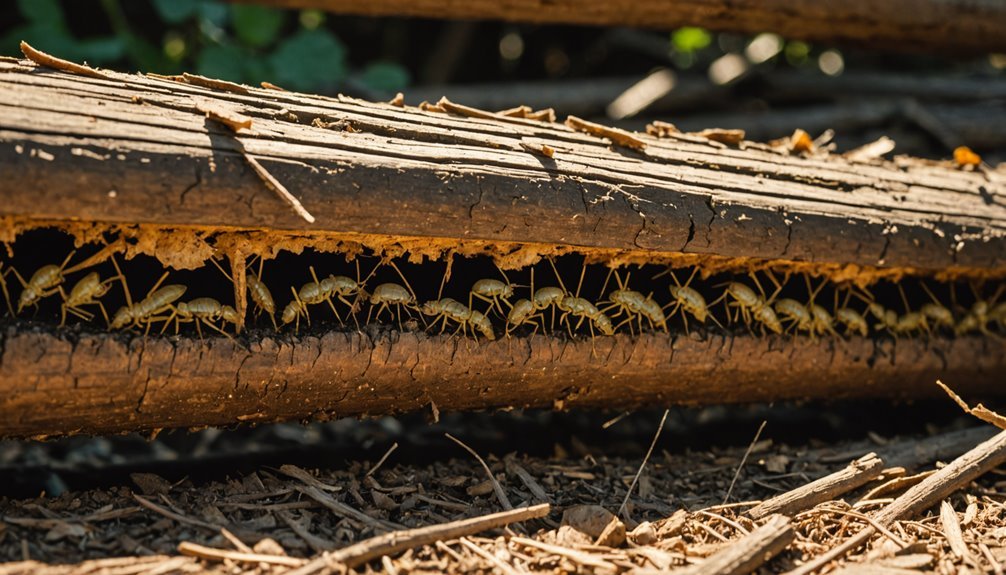
Treating termites yourself can work, but certain home conditions make it easier for termites to survive or return after treatment.
Moisture near your foundation is a major factor. Leaking pipes, poor drainage, and wet crawlspaces all create conditions termites thrive in.
Wood touching soil gives them direct access to your home’s structure, and stored firewood or debris against the foundation keeps them close.
Mulch piled against your siding can hide termite tubes and conceal activity.
Poorly ventilated crawlspaces trap humidity that supports continued infestation.
Foundation cracks as small as 1/32 inch let termites enter through paths your treatment may not reach.
If these conditions go uncorrected, termites can simply bypass or outlast whatever product you apply.
DIY Termite Treatments That Actually Work
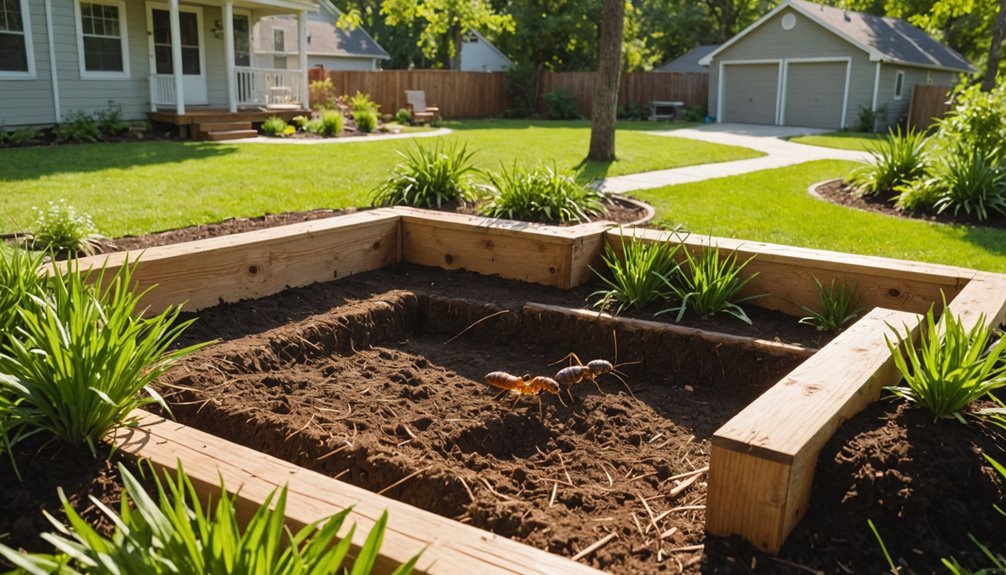
Some DIY termite treatments genuinely work, but only if you match the right product to the right termite type and apply it correctly.
For subterranean termites, soil barrier treatments and bait systems are your strongest options. Dig a trench around your foundation (roughly six inches wide and six to ten inches deep), pour in diluted termiticide at the label rate, then backfill.
Pair that with bait stations you check monthly and refresh when activity appears.
For drywood or localized infestations, apply boric acid powder or spray directly to infested wood, and use aerosol or foam products to reach voids.
Reapply and monitor, because partial coverage leaves survivors. Boric acid helps but won’t eliminate a large infestation alone; it works best as part of a broader plan.
How to Treat Your Foundation With Termiticide
Treating your foundation starts with picking a termiticide labeled for subterranean termites and mixing it to the correct dilution before you touch a shovel.
You’ll then trench around the foundation, loosen the soil at the bottom, and work the dilution evenly through the backfill to build a continuous barrier rather than isolated wet spots.
Once you’ve finished, you’ll need to monitor the treated zone regularly and reapply if you spot new termite activity or if the label’s protection window has closed.
Choosing the Right Termiticide
When treating your foundation with termiticide, the most important decision is choosing the right active ingredient for your foundation type. The wrong product (or misapplication) leaves gaps that termites will find.
Common active ingredients include:
- Fipronil – bonds to soil and resists leaching, making it reliable in wet conditions.
- Imidacloprid – widely available and effective for subterranean termite barriers.
- Bifenthrin – long-lasting soil binding that extends protection after trenching.
- Chlorantraniliprole – an alternative option suited to specific foundation situations.
Your foundation type drives the decision. Slab foundations need perimeter soil treatment, while crawl spaces require exterior and pier treatment.
Hollow block foundations may need interior treatment too. Always match the product to your situation and follow label directions precisely.
Applying Termiticide Properly
Choosing the right termiticide means nothing if you apply it incorrectly; gaps in the chemical barrier are exactly what termites exploit.
Dig a trench around your entire foundation, roughly 6 inches wide and 6 to 10 inches deep. Apply 4 gallons of finished solution per 10 linear feet, adjusting for trench depth. In heavy clay soil, rod every 3 to 4 inches; in sandy soil, space rods 6 to 8 inches apart.
For horizontal barriers under slabs or crawl spaces, apply 1 gallon of diluted termiticide per 10 square feet before the slab is poured.
Spread coverage evenly; spot treatment isn’t enough. If you have coarse gravel fill or foundation drains, use extra dilution to guarantee the termiticide actually reaches the underlying soil.
Reapplication and Monitoring Tips
Even after a successful application, your work isn’t finished. Liquid termiticide barriers typically last 5 to 10 years, and soil conditions, drainage changes, and ground disturbance can shorten that window.
Stay proactive by following these steps:
- Inspect annually for mud tubes, damaged wood, or swarm activity near your foundation.
- Check after heavy rain; washed-out or saturated soil breaks your barrier faster than time does.
- Seal cracks and utility penetrations immediately to eliminate termite entry points your treatment can’t cover.
- Reapply when activity returns, soil is compromised, or the label’s duration expires. Don’t wait for visible destruction.
Always follow your termiticide’s label for reapplication intervals and local regulations.
Your barrier only protects your home if you actively maintain it.
Home Remedies for Termites: What Helps and What Doesn’t
A handful of home remedies can genuinely slow termite activity or kill individual termites on contact, but none of them reliably eliminate a colony.
Vinegar sprays, soapy water, orange oil, boric acid, and neem oil all work as contact treatments when applied directly to termites or infested wood.
Wet cardboard traps are useful for drawing termites into one spot so you can remove and destroy them.
Heat treatment around 120°F for 30 minutes can kill termites in a localized area, and fixing leaks or keeping wood dry reduces what attracts them in the first place.
What doesn’t work well includes saltwater sprays, garlic oil, and peppermint or clove oil mixtures.
These might repel or contact-kill a few termites, but they won’t touch the colony itself.
DIY Mistakes That Let Termites Keep Spreading
Home remedies can knock back surface activity, but the bigger threat to your home isn’t always which product you choose; it’s how you apply it.
These common mistakes keep termites feeding long after you think you’ve solved the problem:
- Treating visible damage only: the actual colony stays untouched, deep inside walls and framing.
- Misidentifying termites as ants: you end up treating the wrong pest entirely while damage continues.
- Skipping soil barrier preparation: improper trenching or wrong application volume leaves foundation gaps open.
- Ignoring moisture problems: leaks, poor drainage, and damp soil give surviving termites everything they need to rebuild.
Each mistake doesn’t just waste money; it gives termites more time to destroy structural wood you can’t easily see or replace.
When You Need to Call a Professional Instead
While DIY methods can help with prevention, there are clear thresholds where you need to stop and call a licensed professional. If you’ve confirmed termite activity through mud tubes, hollow wood, frass, discarded wings, or bubbling paint, don’t delay.
The same applies if damage is near load-bearing wood, since structural safety requires professional evaluation.
Moisture-prone areas like crawl spaces, basements, or areas near sinks make infestations harder to detect and DIY treatment less reliable.
If you’ve already attempted treatment and activity has returned, that’s a sign the colony isn’t resolved.
Finally, if whole-house eradication is needed, only licensed professionals can legally apply fumigation or heat treatments. Spot fixes won’t reach hidden spread, and waiting only increases the risk of costly structural repairs.
How to Keep Termites From Coming Back
Once you’ve dealt with an active infestation (whether through DIY methods or professional treatment), keeping termites from returning comes down to eliminating the conditions that attracted them in the first place.
Don’t let your hard work go to waste:
- Fix moisture problems immediately: repair leaks, improve drainage, and ventilate crawl spaces before dampness invites termites back.
- Break wood-to-soil contact: keep siding, posts, and frames at least six inches above ground level.
- Clean up your yard: store firewood off the ground, remove stumps, and pull mulch away from your foundation.
- Seal entry points: fill foundation cracks, gaps around utilities, and any opening termites could exploit.
Schedule annual inspections and monitor your perimeter regularly.
Catching early warning signs protects everything you’ve worked to save.
Frequently Asked Questions
Does Homeowners Insurance Typically Cover Termite Damage Repairs?
Your homeowners insurance typically doesn’t cover termite damage repairs. Insurers treat infestations as preventable maintenance issues, not sudden accidents. You’ll usually pay out of pocket unless termites cause a covered peril, like a fire.
How Long Does a Professional Termite Treatment Usually Last?
A professional termite treatment usually lasts 5 to 10 years, depending on the method. Liquid barriers often last about 5 years, while wood treatments can protect for up to 10. You’ll still need annual inspections.
Are Certain Geographic Regions More Prone to Termite Infestations?
Yes, certain regions are far more prone to termites. If you live in Florida, Texas, California, Georgia, or the Gulf Coast states, you’re in high-risk territory where warm, humid conditions fuel heavy infestations year-round.
Can Termites Spread From My Home to My Neighbor’s Property?
Yes, termites can spread from your home to your neighbor’s property. They’ll travel through soil tunnels, mud tubes, and shared wooden structures, covering up to 150 feet, putting neighboring homes at significant risk.
What Time of Year Are Termites Most Actively Seeking New Colonies?
You’ll see termites most actively seeking new colonies in spring, typically March through May. Warm, humid weather and post-rain conditions trigger swarms, so you should stay especially alert during these months for winged termites indoors.
Conclusion
You’ve got options when it comes to treating termites yourself, but success depends on catching the problem early and using the right approach. DIY treatments can work for minor infestations, but serious damage calls for professional help. Whatever route you take, don’t skip prevention steps once the termites are gone. Staying proactive is your best defense against another costly infestation down the road.