Termite Nests What Do They Look Like
Termite nests don’t always look like the towering mounds you’ve seen in documentaries. Subterranean termites build pencil-thick mud tubes along your foundation walls, while drywood termites hide entirely inside wood, leaving behind tiny frass pellets as their only calling card. Dampwood termites nest in moist, rotting wood near leaks or poor ventilation. You might also notice hollow-sounding walls, bubbling paint, or discarded wings near windows. Keep going to learn exactly what to look for.
Key Takeaways
- Termite nests appear as large, dark masses on exterior walls with irregular ridges, bumps, and layered earthen buildup covering the surface.
- Subterranean termites build pencil-thick mud tubes made of soil, wood particles, and saliva along foundation walls and crawlspaces.
- Small holes or chimney-like vents on nest surfaces allow airflow and gas exchange within the colony’s tunnel network.
- Drywood termite nests are hidden entirely inside wood, identifiable by tiny frass pellets resembling sawdust near kick-out holes.
- Dampwood termite nests thrive in moist, rotting wood, often accompanied by hollow-sounding timber and sawdust-like debris nearby.
Termite Nest Appearances at a Glance: A Quick Visual Guide
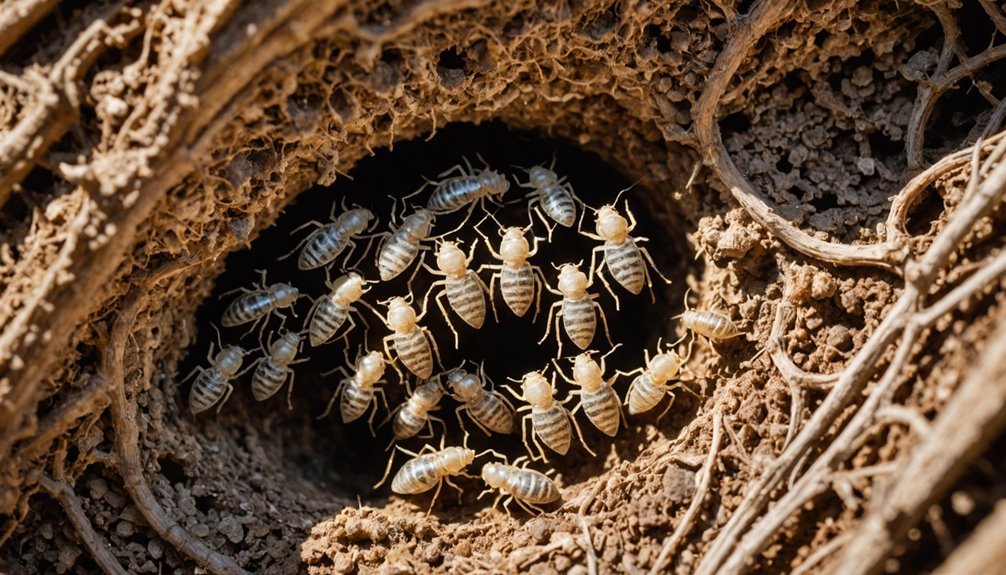
Termite nests take many forms, and knowing what to look for can save you from missing an infestation hiding in plain sight. You might spot a large, dark mass on an exterior wall, pencil-thick mud tubes running along your foundation, or clay-colored clumps attached to timber.
Some nests stay hidden inside wall cavities or wood, revealing themselves only through hollow-sounding boards, blistered paint, or sagging floors. Frass near baseboards can resemble fine sand or coffee grounds, while discarded silvery wings near windows signal a nearby colony.
Termite bodies range from creamy white workers to dark brown swarmers. Whether exposed or concealed, these signs point to active nesting, and catching them early gives you a real advantage. Subterranean termites are especially common in Queensland and frequently build their colonies underground, making them particularly difficult to detect without professional help.
Subterranean Termite Nests and Their Mud Tubes
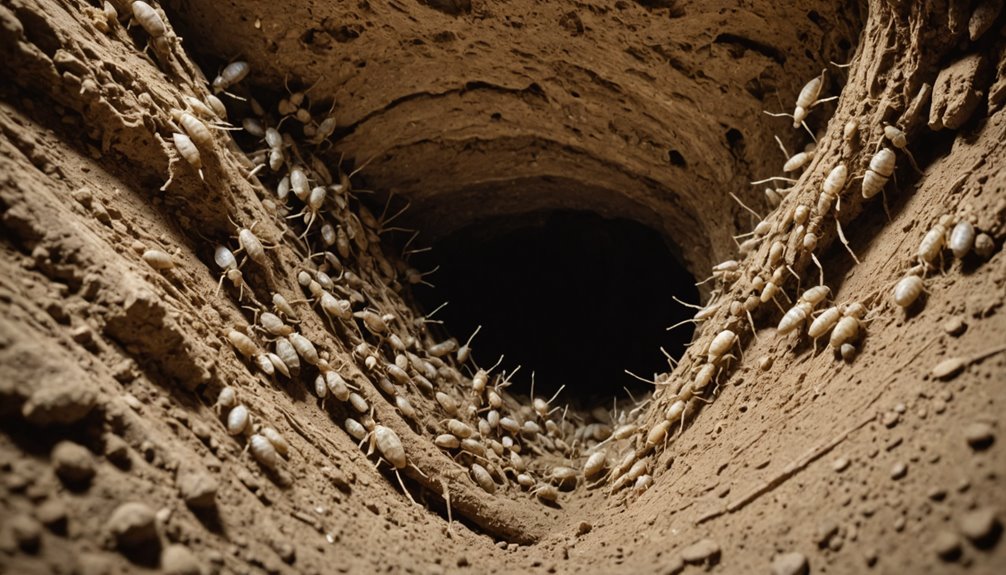
When you spot mud tubes — narrow, pencil-sized structures made of soil, wood particles, and saliva — you’re looking at one of the clearest signs of a subterranean termite infestation.
You’ll typically find them running along exterior foundations, concrete walls, porches, and baseboards, though they can also hide inside crawlspaces, wall framing, and foundation cracks.
If you break a section open and see it repaired within a few days, you’re dealing with an active colony that’s likely nesting underground nearby. These tubes are essential for termite survival because they retain moisture, shielding termites from dry conditions that would otherwise be fatal to them.
Mud Tube Identification Signs
Subterranean termite mud tubes are earth-colored structures made from soil, wood particles, termite saliva, and other organic material. They typically appear brown, gray, or light brown and blend easily into foundation surfaces, concrete, or siding.
Fresh tubes look moist and darker, while older ones feel dry, brittle, or crumbly. The surface is rough and gritty rather than smooth.
When inspecting for activity, look for intact tubes that continue extending, as these suggest active movement. Finding multiple tubes may indicate a larger colony or several entry points.
If you open a tube and spot live termites, that’s direct confirmation of infestation. You might also notice discarded wings, damaged wood, or mud-like galleries inside wood structures.
For reliable confirmation, a professional termite inspection is your best option. These tubes also serve as protection from predators, helping termites travel safely between their nest and food sources.
Underground Colony Locations
Once you’ve spotted mud tubes on your foundation or walls, the next question is: where exactly is the colony? Subterranean termite colonies live several feet underground, often hidden within branching galleries of soil, saliva, and wood particles. The nest itself may not sit directly beneath the damage — it could be hundreds of feet away. Workers are known to forage over 250 feet from the colony in search of food sources.
| Location Type | Typical Depth | Distance From Structure |
|---|---|---|
| Shallow nest | 4–8 inches | Adjacent to foundation |
| Mid-level nest | 8–18 inches | Backyard or nearby soil |
| Deep/extended nest | Several feet | Up to 300-foot radius |
Because colonies stay concealed underground, you won’t find them by inspecting visible wood alone. Probing soil, tracing mud tubes, and professional detection methods help you identify where the nest actually sits.
Drywood Termite Nests Hide Inside the Wood Itself
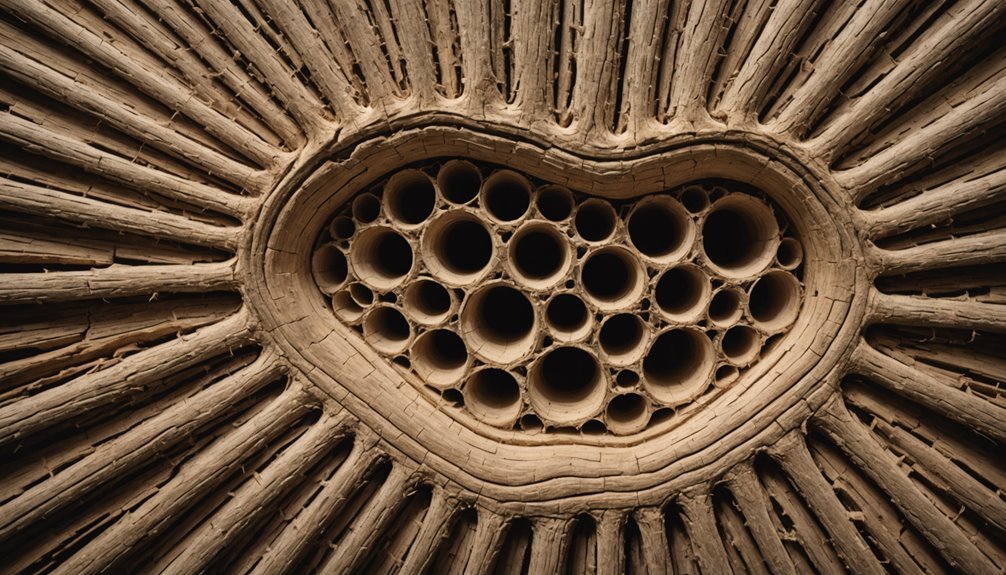
Unlike subterranean termites, drywood termites don’t need soil contact—they build their entire nest inside the wood itself.
You’ll find them in attics, wood framing, fascia boards, window sills, doors, floors, and furniture. The galleries inside look smooth and clean, since termites push waste out rather than leaving it behind.
That expelled waste, called frass, is your biggest clue. The six-sided, barrel-shaped pellets collect in small piles beneath tiny kick-out holes, which measure only 1 to 2 mm wide.
You might also notice hollow-sounding wood, blistering, or warping on the surface.
Colonies stay small—often fewer than 1,000 individuals—and can spread across multiple wood members. Drywood termites feed on the cellulose in wood, which is why they can sustain entire colonies without ever leaving the structure they’ve infested.
Because nests stay hidden inside the wood, infestations can persist for years before you spot them.
Dampwood Termite Nests Thrive Where Moisture Collects
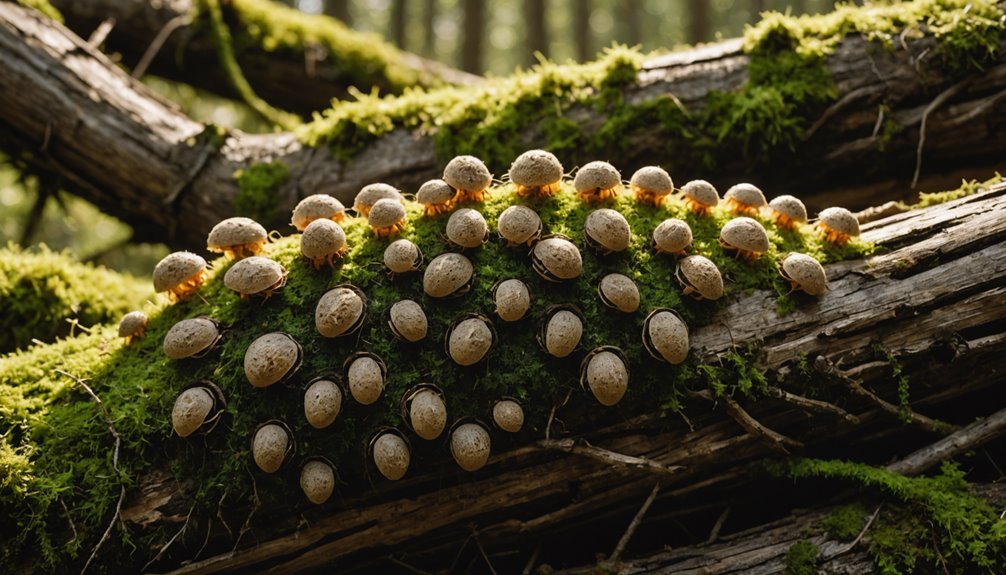
Unlike drywood termites, dampwood termites won’t nest in just any wood — they need moisture to survive and build their colonies.
If you’ve got rotting logs, leaky pipes near wooden structures, or wood sitting in contact with damp soil, you’re creating the exact conditions that invite these termites in.
You mightn’t notice an infestation until the damage runs deep, since colonies stay hidden inside the wet wood they’re consuming.
Moisture Triggers Nest Formation
Dampwood termites build their nests where moisture collects, making wet or decaying wood their primary target. You’ll find them drawn to conditions created by leaky pipes, clogged gutters, roof leaks, and poor ventilation.
Unlike subterranean termites, they don’t need soil contact to survive, so any persistently damp wood can become a nesting site.
When you inspect areas with poor drainage around decks, foundations, or crawlspaces, you’re looking at prime nesting territory. AC units, irrigation systems, and faulty plumbing can also create the moisture levels dampwood termites need.
Controlling an infestation means addressing the moisture first. Insecticide treatments won’t hold if damp conditions remain.
You’ll need to repair leaks, improve ventilation, and remove damaged wood to eliminate the environment supporting the nest.
Hidden Damp Wood Risks
Because dampwood termite nests stay hidden inside wood, you won’t spot them the way you’d notice subterranean termite mud tubes. Instead, look for hollow-sounding wood, sawdust-like debris, and soft or damaged lumber near moisture sources.
| Risk Location | Moisture Cause |
|---|---|
| Basement beams | Plumbing leaks |
| Crawlspace lumber | Poor ventilation |
| Window frames | Water intrusion |
| Fence posts | Ground contact |
Probe suspect wood with a screwdriver—if it sinks easily or exposes galleries, you’ve likely found an active nest. Dead insects or frass near openings also signal concealed activity. Fix leaks, improve drainage, and replace moisture-damaged wood promptly, since treatment works poorly when damp conditions remain.
What Above-Ground Termite Mounds Actually Look Like
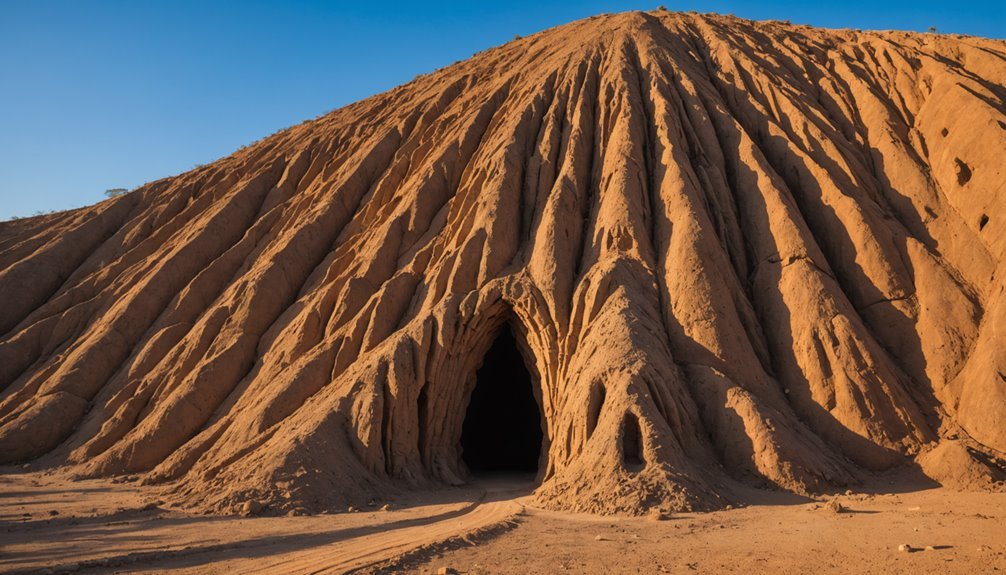
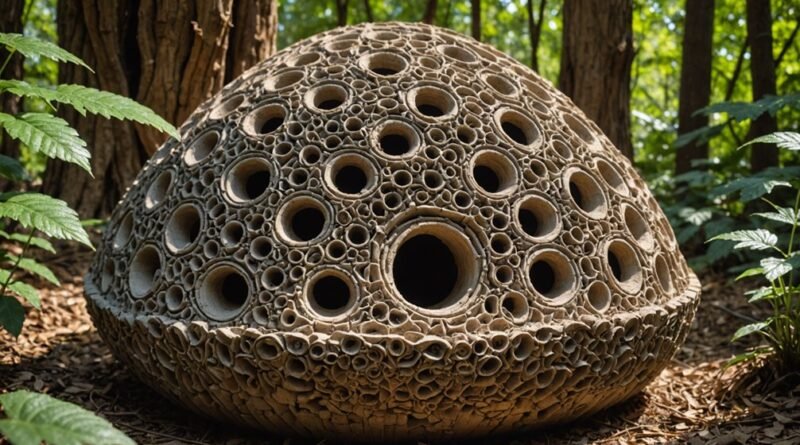
When you picture a termite mound, the image that comes to mind is probably a tall, tower-like spire of hardened earth rising dramatically from the ground — and in many cases, that’s exactly what you’d find.
Built from soil, saliva, and excrement, these structures can reach 8 meters tall.
Here’s what you’d actually observe:
- A hardened, compact exterior in gray or reddish tones matching local soil
- Irregular ridges, bumps, and layered earthen buildup rather than a smooth surface
- Small holes or chimney-like vents for airflow and gas exchange
- Active entry and exit points showing colony movement
Inside, you’d find a complex network of tunnels and chambers engineered to regulate temperature and airflow throughout the colony.
Where to Look for Termite Nests in and Around Your Home
Knowing where to look is half the battle when searching for termite nests, since these insects favor hidden, low-traffic zones that often go unnoticed for years. Check these key locations thoroughly:
| Location | What to Look For |
|---|---|
| Foundation walls | Pencil-thick mud tubes on concrete or brick |
| Crawl spaces | Soft joists, damaged sill plates, moisture buildup |
| Interior wall voids | Bubbling drywall, hollow-sounding wood, warped baseboards |
| Attic framing | Soft roof members, insulation-covered leaks, stored wood |
| Yard and decks | Wood-to-soil contact, damp mulch, debris piles |
You’ll find termites where darkness, moisture, and undisturbed wood intersect. Cracks near the foundation, unfinished basements, and poorly ventilated crawl spaces are especially high-risk. Inspect these zones regularly to catch activity before structural damage becomes severe.
Signs of a Termite Nest You Can’t See Yet
Most termite colonies reveal themselves through indirect clues long before you spot live insects or crumbling wood. Knowing what to look for helps you act before serious structural damage sets in.
Termite colonies leave clues long before visible damage appears — recognizing them early makes all the difference.
Watch for these four hidden warning signs:
- Mud tubes running along foundation walls or slab edges, especially sections that rebuild after you break them.
- Hollow or papery sounds when tapping baseboards, beams, or floorboards.
- Bubbling, blistering, or peeling paint caused by moisture termites introduce into wood.
- Frass piles resembling sawdust or tiny rigid pellets near baseboards, window frames, or furniture.
You might also notice clicking sounds inside walls, warped door frames, or discarded wings near light sources. Each clue points to activity happening out of sight.
How to Identify Which Termite Type You Have
Telling a termite apart from an ant is the first step, and it’s easier than you’d think. Termites have straight, beaded antennae, equal-length wings, and no pinched waist. Once you’ve confirmed it’s a termite, narrow down the type using these clues:
| Clue | What It Suggests |
|---|---|
| Mud tubes on foundation walls | Subterranean termites |
| Tiny frass pellets near wood | Drywood termites |
| Dark reproductives, pale workers | Subterranean colony |
Drywood termites live inside dry wood without soil contact, while subterranean termites travel through mud tubes from underground. Wood packed with mud points toward subterranean activity. If you’re still unsure, get a professional inspection since many infestations stay hidden and species traits overlap.
Frequently Asked Questions
Can Termite Nests Spread From One Home to a Neighboring Property?
Yes, termites can spread to your neighboring property. They’ll travel through underground foraging networks extending up to 50 metres, using soil channels, mud tubes, shared fences, and moist conditions to reach and infest nearby homes.
How Long Does It Typically Take a Termite Colony to Cause Structural Damage?
A termite colony can start causing structural damage within months of becoming established. You won’t always see early warning signs, so don’t wait—get a professional inspection as soon as you suspect an infestation.
Do Termite Nests Ever Become Inactive or Die off Without Treatment?
Yes, termite nests can become inactive without treatment. Colonies can die off from cold temperatures, loss of moisture, or food sources. However, you shouldn’t assume inactivity from appearance alone, as hidden activity may still persist.
Are Certain Wood Types More Resistant to Termite Nest Formation Than Others?
Yes, some woods resist termites better than others, but none are fully immune. You’ll find hardwoods like oak offer more resistance than softwoods like pine, yet drywood termites still infest them when conditions favor nesting.
Can Pets or Wildlife Detect Termite Nests Before Humans Notice Them?
Yes, your pets can detect termite nests before you notice them. Trained dogs achieve up to 100% accuracy identifying live colonies by scent, and wildlife like birds and mammals regularly locate termite mounds instinctively.
Conclusion
Now that you know what termite nests look like, you’re better equipped to spot trouble before it becomes a costly disaster. Whether you’re dealing with subterranean mud tubes, drywood galleries, or massive above-ground mounds, early detection is your best defense. Don’t ignore the warning signs—act quickly, contact a pest control professional, and protect your home from these destructive insects before they cause serious structural damage.