Signs of Termites in Kitchen
If you notice flying termites around lights, discarded wings on surfaces, or tiny mud tubes, it’s time to check for termites in your kitchen. Listen for hollow sounds in wood and look for signs like blistering or bubbling on surfaces, these could mean hidden damage. Keep an eye out for termite droppings that resemble rice grains. Moisture issues like water stains or warped wood might invite termites, so addressing leaks is essential. Discover more to protect your space.
Key Takeaways
- Flying termites near windows or lights signal a potential indoor colony in the kitchen.
- Discarded wings on surfaces indicate termite swarmers establishing a colony nearby.
- Mud tubes on walls or foundations show active termite paths and infestation.
- Hollow sounds when tapping wood suggest internal termite damage in kitchen structures.
- Presence of frass, resembling rice grains, indicates drywood termite activity around wood areas.
Spotting Flying Termites Indoors
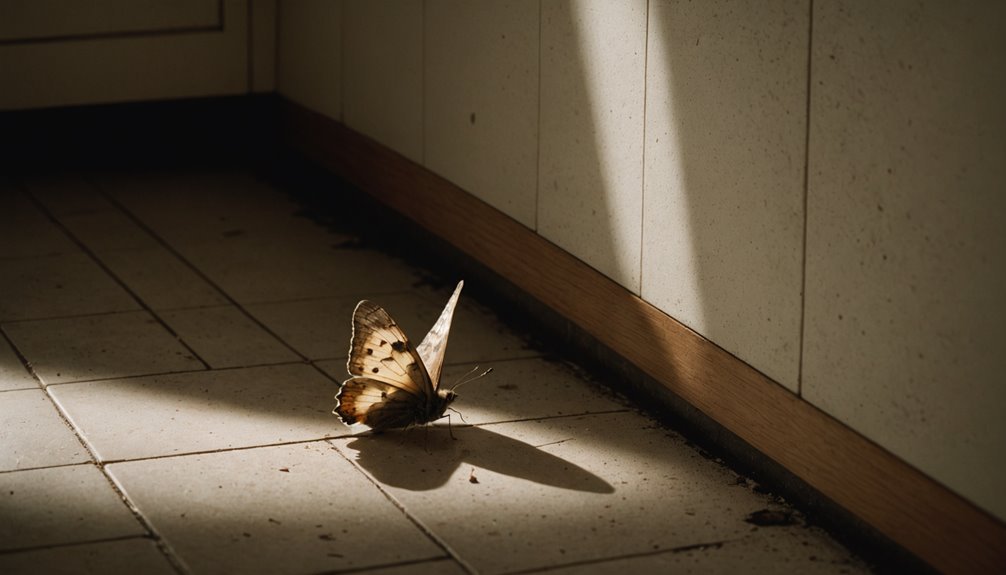
How can you tell if those flying insects indoors are termites? You’ll notice them swarming around lights, especially near windows, doors, and vents. They’re drawn to light, making evening swarms common, particularly after rain. If you spot large numbers indoors, it’s a strong indicator of a nearby or internal colony. Look closely at windowsills, door frames, and light fixtures where they often congregate.
These swarmers emerging from walls or floors suggest an infestation within the structure. Spotting them in kitchens, especially near bright fixtures or sink-area openings, signals potential access through plumbing gaps. If you repeatedly see them in the same spot, it points to an active source. It’s time to gather specimens and consult a pest professional. Additionally, discarded wings around these areas can indicate mating and new colony establishment.
Recognizing Discarded Wings on Surfaces
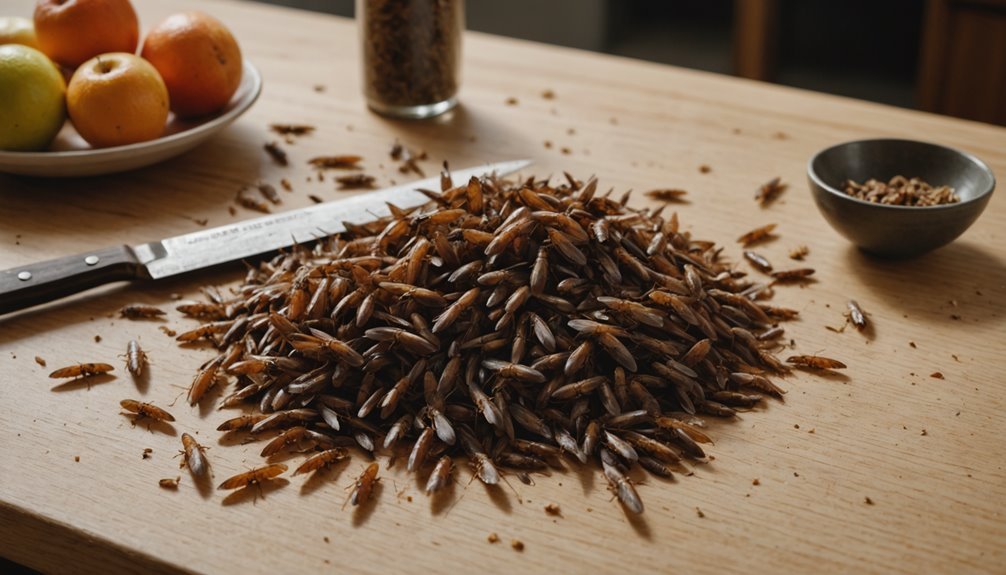
If you spot small, delicate wings scattered on your windowsills or floors, you might be seeing signs of termite swarmers. These wings typically appear in pairs of equal length and may look like tiny fish scales. Finding clusters of these translucent wings indoors strongly suggests a nearby termite colony, indicating it’s time for a closer inspection. Presence often undetected until severe damage occurs, so spotting these wings early can help prevent costly repairs.
Identifying Winged Termites
Although termites are elusive, identifying their presence becomes easier when you recognize discarded wings on surfaces.
Winged termites, or alates, are often mistaken for flying ants, but you can tell them apart by their two pairs of equal-length, translucent wings. These wings are typically veiny and similar in size, unlike ant wings. You’ll often find discarded wings on floors, countertops, windowsills, and near light sources like kitchen fixtures.
These wings signal that termites have swarmed, mated, and are establishing a colony, which is a strong sign of termite activity. Termites are attracted to wood and moisture sources, making it crucial to address any leaks or drainage issues. If you discover such wings, it’s essential to save them for identification and consider a professional inspection.
This evidence might point to a mature colony nearby or inside your home.
Recognizing Wing Clusters
Spotting discarded wings is a significant clue in detecting termite activity. You’ll often find wing piles on counters, floors, and windowsills, indicating termite swarming. These wings are shed by swarmers after they settle, usually near entry points like windows and doors.
Look for clusters of translucent, veiny wings, typically about the size of rice grains. They’re often equal in length, forming noticeable stacks where swarmers congregate.
Finding these wings suggests a mature colony nearby, possibly within walls or wood structures. Document their location and appearance immediately for inspection purposes.
Don’t sweep them away; instead, photograph them and investigate nearby wood for further signs like hollow sounds or mud tubes. This evidence supports professional evaluation and potential intervention.
Distinguishing Termites From Ants
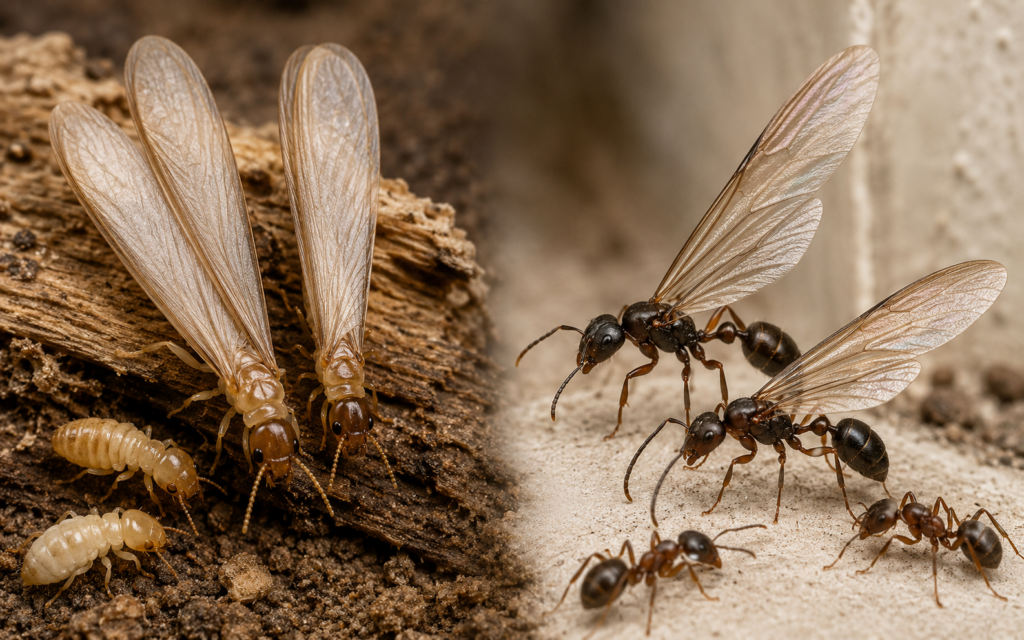
When trying to distinguish termites from ants, focus on their body shape and antennae structure. Termites have a thick, straight body with little waist, while ants showcase a narrow, pinched waist.
If you spot insects in your kitchen, check their antennae: termites have straight, bead-like antennae, whereas ants have bent or elbowed ones. This quick check can save you a lot of trouble.
Look at their wings if they’re winged. Termite wings are equal in length and fragile, often found shed around windowsills. In contrast, ants have front wings longer than their hind ones.
Color also plays a role termites are pale or light brown, while ants are darker. Observing these traits will help you identify the pest accurately.
Spotting Mud Tubes
When you’re spotting mud tubes, focus on areas like foundation walls, crawl spaces, and utility entry points where termites frequently travel.
These pencil-width tunnels, made from soil, wood particles, and saliva, help termites retain moisture and reach food sources.
If you find these tubes, it means termites are actively moving, and the condition of the tubes can reveal whether they’re currently in use.
Identifying Mud Tube Locations
Although identifying mud tubes might seem challenging, focusing on key areas can simplify the process. Start by inspecting the exterior foundation perimeter, especially where the slab meets the siding or wooden sill plate.
Look behind dense bushes, mulch beds, and stacked firewood, as these can hide tubes. Pay attention to corners, cracks, and expansion joints along the perimeter.
Inside, check basement and crawl space walls for tubes, especially near foundation corners and around plumbing or electrical penetrations. Use a bright flashlight to spot them in low-light areas.
In kitchen-adjacent spaces, examine baseboards and drywall cracks near plumbing lines. Areas around sinks, dishwashers, and utility chases are vital due to moisture.
Document every tube location to track activity patterns.
Understanding Tube Construction
Spotting mud tubes becomes easier once you know where to look. These pencil-width structures are built from soil, wood particles, and termite saliva, forming hardened tunnels.
Look for them along foundation walls, support piers, and floor joists. Fresh tubes often appear damp and earth-like, while old ones look dry and brittle.
A quick way to check for activity is to gently break a section. If termites repair it within a day or two, it’s active. Tubes serve as protected pathways for termites, avoiding light and open air.
Document their appearance with photos, including a scale object for size reference. Mark their locations on a sketch to track the infestation pattern and focus inspections on nearby areas.
Implications of Tube Presence
Discovering mud tubes in your home is a critical indicator of a termite infestation. These tubes are clear signs of active subterranean termites, often leading to colonies ranging from thousands to millions.
Spotting even one can mean termites are feeding nearby or within your kitchen’s structure, posing a serious risk. While the tubes themselves don’t damage materials, they let termites access and consume wood, potentially causing significant structural harm over time.
Tubes maintain a humid environment, protecting termites from harsh conditions. The presence of fresh or rebuilt tubes suggests ongoing activity, requiring urgent attention.
Don’t disturb them. Instead, photograph the tubes and schedule a professional inspection. Treat these discoveries as a warning, as the hidden colony could be causing extensive damage.
Detecting Hollow or Damaged Wood
When tapping wood around your home, a dull or hollow sound might point to termite damage lurking beneath the surface. Healthy wood sounds solid, but termite activity can leave it hollow. Use a screwdriver handle to tap suspect areas like cabinets, baseboards, and toe-kicks. If it sounds hollow, termites might’ve consumed the internal fibers, leaving only a fragile outer layer.
Check for wood that feels soft, brittle, or crumbles easily. Light pressure with a screwdriver can reveal damage, indicating compromised structural integrity.
Also, look for blistering or bubbling on wood surfaces, as termites can cause these distortions. These signs suggest hidden termite activity, requiring attention to prevent further damage in your kitchen.
Identifying Termite Droppings and Frass
Termite droppings, known as frass, are a telltale sign of drywood termite activity in your kitchen. You’ll spot these solid, pellet-like droppings near wood areas like cabinets, trim, or furniture.
Frass is pushed out through kickout holes, forming neat piles. Unlike sawdust, termite pellets are oval-shaped with rounded ends and six concave sides, typically 1 mm in length, resembling tiny grains of rice.
Fresh frass is often light brown or tan, hard, and dry, distinct from moist food crumbs. Look for these pellets below infested wood or near exit holes; repeated appearances suggest an active colony.
Moisture Damage: A Termite Red Flag
As you keep an eye out for frass in your kitchen, another key indicator of termite trouble is moisture damage. Termites love damp conditions, especially near plumbing and under sinks.
Leaks often lead to wood damage, attracting termites to softened areas. Condensation on pipes or windows signals high humidity, a perfect environment for termites. If the relative humidity rises above 50%, it’s a warning sign, especially in humid months.
Look for water stains, peeling paint, or warped wood, these are red flags. Persistent dampness in cabinet bases or sink cavities allows termites to exploit gaps.
Check for hidden leaks under sinks and around plumbing. Soft spots or hollow wood indicate possible termite feeding, as moisture and termites often go hand-in-hand.
Check These Kitchen Spots for Termites
While monitoring your kitchen for signs of termites, focus on key areas that often show early evidence of infestations. Start with cabinets and cabinet interiors. Look for powdery frass, soft or hollow wood, and tiny pinholes. Raised bumps or blistered finishes can also be warning signs.
Under the sink, inspect around plumbing for soft surfaces or damaged wood. Pay attention to walls, corners, and skirting boards for mud tubes and discolored wood.
Floor areas, especially toe-kicks, may reveal blisters or hollow sounds. Don’t forget windows and lights; discarded wings or mud tubes near access points indicate activity.
Regularly check these spots to catch infestations early and minimize damage.
Preventing Kitchen Termite Infestations
After checking key kitchen areas for early signs of termites, it’s important to implement strategies to prevent infestations. Start by fixing leaky faucets and ensuring proper drainage to control moisture. Keep kitchen surfaces dry and improve ventilation to avoid dampness. Remove wood debris and avoid storing wood near your kitchen. Use cellulose-free materials in moisture-prone spots. Seal cracks and gaps in walls, cabinets, and around utilities to block entry points. Regularly clean and inspect for mud tubes or wood damage. Consider professional pest control if needed.
Here’s a quick guide:
| Moisture Control | Wood Management | Exclusion & Sealing |
|---|---|---|
| Fix leaks | Remove wood debris | Seal cracks |
| Improve ventilation | Avoid wood storage | Install weather stripping |
| Use moisture meter | Limit wood-to-soil contact | Use caulk |
| Maintain drainage | Use non-wood alternatives | Repair weak points |
Frequently Asked Questions
How Do Termite Infestations Affect Kitchen Air Quality?
Termite infestations affect kitchen air quality by creating damp conditions that lead to mold and musty odors. They damage wood, increasing dust and debris. Address leaks and improve ventilation to protect your kitchen’s air quality.
Can Termites Cause Electrical Issues in Kitchens?
Yes, termites can cause electrical issues in kitchens. They chew through wire insulation, leading to short circuits, power outages, and potential fires. Regular inspections and moisture control can help prevent these hazardous situations.
What Non-Wood Kitchen Items Can Termites Damage?
Termites can damage paper towels, cardboard packaging, books, drywall paper, and chipboard. They’ll chew through kitchen cabinets, laminated surfaces, and even rigid foam insulation. Watch for mud tubes and frass as signs of their presence.
How Do Termites Impact Kitchen Insulation Materials?
Termites tunnel through kitchen insulation, reducing its effectiveness by compromising thermal performance. You might notice increased utility bills as they create hidden paths, allowing heat loss and possibly leading to moisture issues or structural damage.
Are There Natural Deterrents for Termites in Kitchens?
You can use natural deterrents like orange oil, clove oil, and neem oil in kitchens, but be cautious around food. These methods offer temporary relief. For serious issues, inspect thoroughly and consider professional help.
Conclusion
If you notice any of these signs, take action quickly to protect your kitchen. Keep an eye out for flying termites, discarded wings, and mud tubes. Remember, termites can be mistaken for ants, so double-check. Listen for hollow wood and look for droppings or frass. Moisture is a big red flag, so inspect potential hotspots. By staying vigilant, you can prevent infestations and keep your kitchen termite-free. Don’t wait, address any issues immediately!