How to Get Rid of Termites in Walls
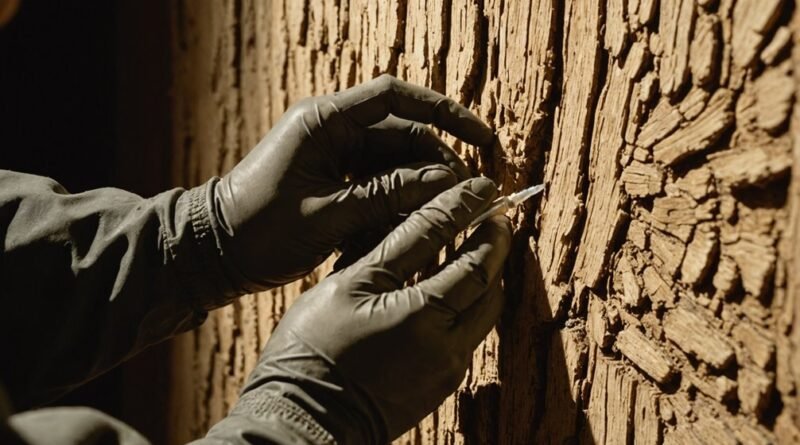
To get rid of termites in walls, you’ll need to locate active galleries, drill small access holes, and inject foam or liquid termiticide directly into the infested cavities. Seal the holes after treatment and trench the soil around your foundation to apply a liquid termiticide barrier. Fix any moisture issues and remove wood debris from your yard to prevent reinfestation. Keep going to uncover everything you need to fully eliminate termites for good.
Key Takeaways
- Drill small access holes in drywall to reach active termite galleries, then confirm activity using a borescope before applying treatment.
- Inject foam or liquid termiticide directly into wall cavities to eliminate termites hiding within structural wood.
- Listen for hollow or papery sounds when tapping walls to help pinpoint the exact infestation location.
- Seal all drilled holes after treatment and schedule periodic inspections to monitor for renewed termite activity.
- Fix leaky pipes and replace decayed wood inside walls, as moisture attracts and sustains termite colonies.
How to Tell If Termites Are Inside Your Walls
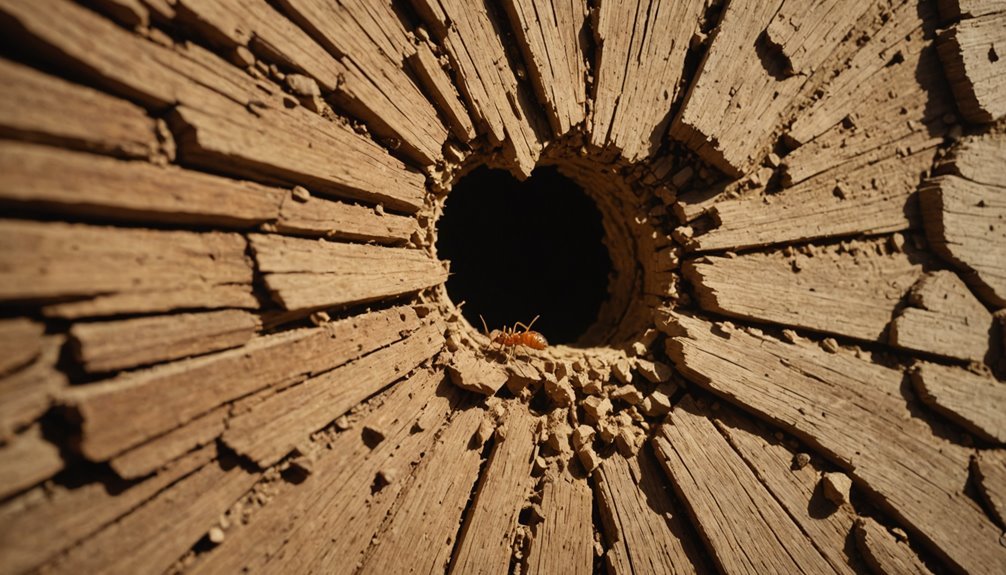
Termites are sneaky: they can hollow out your walls for years before you notice anything wrong. Knowing the warning signs early can save you from costly repairs.
Start by checking for mud tubes along your foundation, crawl spaces, or sill plates. These pencil-width tunnels are a strong indicator of subterranean termite activity.
Mud tubes along your foundation or crawl spaces are a telltale sign of subterranean termite activity beneath your home.
Next, tap your walls and listen for a hollow or papery sound, which suggests internal tunneling. Look for tiny pinholes in drywall, bubbling paint, or faint lines tracing hidden tunnels beneath the surface.
Watch for discarded wings near windowsills or swarmers emerging from walls. Also, notice if your doors or windows suddenly stick or jam, which can signal hidden structural damage.
Combine multiple signs before drawing conclusions. Small granular pellets near walls can also be a telltale indicator that termites are actively present inside your home.
How to Treat Termites in Walls Step by Step
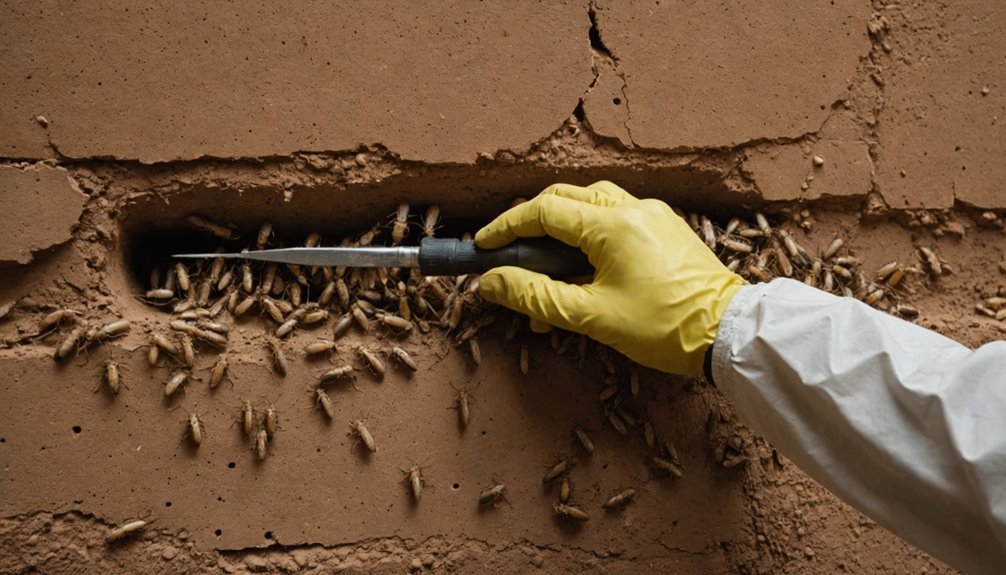
Once you’ve confirmed termite activity inside your walls, the first step is pinpointing exactly where they’ve established themselves. Assess whether the infestation is localized to a few studs or spread across multiple sections, since that determines your treatment approach.
Next, drill small access holes into the drywall at the base of the affected wall, aligning them with studs to reach active galleries. Use a borescope through these openings to confirm activity before applying any product.
Inject foam or liquid termiticide directly into the cavity. Foam is often preferred because it expands through hidden voids. If the infestation is severe, consider fumigation for full-structure elimination.
After treatment, seal all drilled holes with spackle or caulk, close any cracks or gaps, and schedule periodic inspections to catch any renewed activity early. To further protect your home long-term, conduct regular inspections every 6 to 12 months, focusing on vulnerable areas such as foundations, crawl spaces, and wooden structures.
Treat the Soil and Perimeter to Stop Termites at the Source

Because subterranean termites live and travel through the soil, treating the ground around your foundation is one of the most effective ways to cut off their access to your home.
Dig a trench roughly 6 inches wide and 6 inches deep along the foundation, then apply a liquid termiticide like imidacloprid or fipronil directly into the soil. Use rodding to inject termiticide every 12 inches where deeper treatment is needed near footings or basements.
Treat beneath slabs, garage floors, and entry platforms, and seal any cracks in your foundation with cement or caulk.
Support the chemical barrier by maintaining a 12–18 inch mulch- and plant-free zone around your foundation.
Remove woodpiles, stumps, and debris that attract termites and compromise the treated soil. This approach targets termites directly in the soil, eliminating them before they ever reach the structure of your home.
Fix Moisture Problems and Structural Gaps That Let Termites In
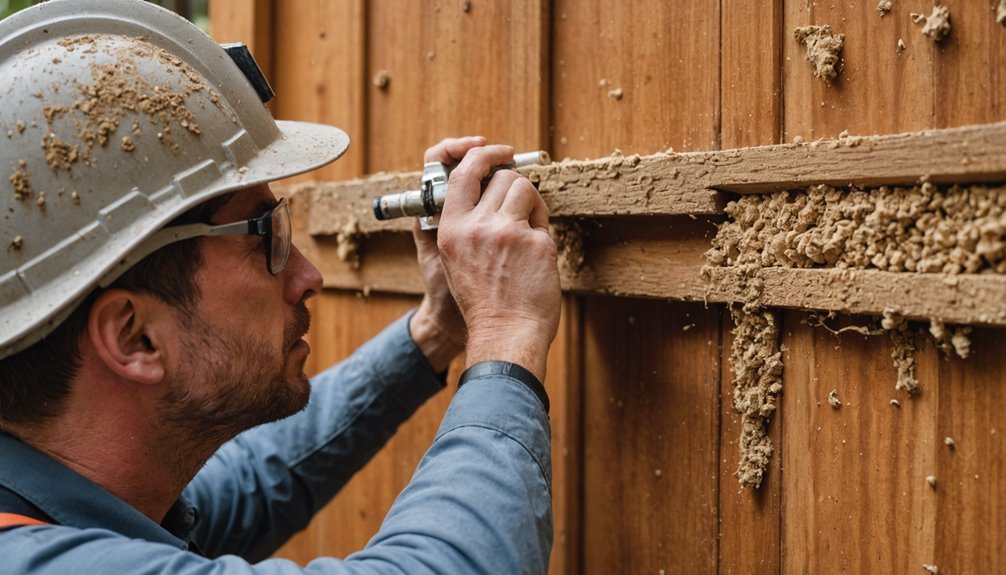
Cutting off termite access through the soil is only part of the picture; moisture problems and structural gaps can undermine even the best chemical barrier.
Fix leaky pipes, faucets, and roof penetrations immediately, since termites target the damp, softened wood that follows water damage. Replace any decayed wood promptly, as it’s far easier for termites to exploit.
Use a moisture meter to audit crawl spaces, basements, and wall cavities, then prioritize repairs by severity.
Grade soil at least 5% over the first 5 feet so water drains away from your foundation, and extend downspouts at least 5 feet from the house.
Install a 6-mil polyethylene vapor barrier across crawlspace soil with seams taped and sealed.
Keep crawlspace humidity below 50% through proper ventilation and regular monitoring. Clogged gutters that overflow onto the foundation create consistent moisture sources that draw termite activity directly to your home’s perimeter.
Remove Yard Conditions That Give Termites a Way Back In
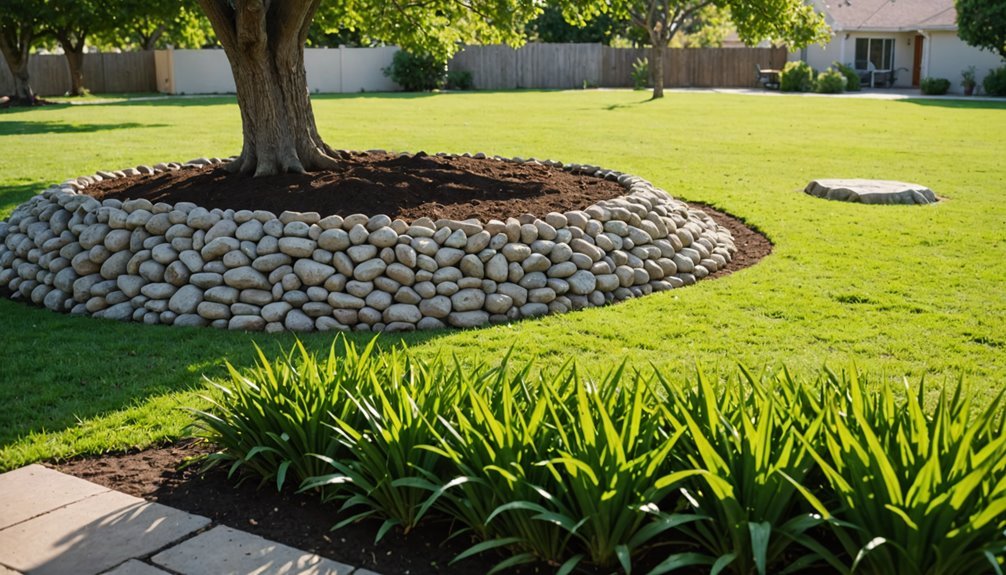
Even if your foundation is sealed and moisture is under control, an untreated yard can funnel termites right back in. Keep mulch 6 to 12 inches from the foundation and avoid thick, layered beds that trap moisture.
Store firewood at least 20 feet from the house and off the ground. Remove scrap wood, cardboard, dead stumps, and leaf litter from the yard since all of these feed termite colonies.
Trim shrubs and vines away from exterior walls to eliminate sheltered pathways. Grade soil so water drains away from the foundation, and make sure gutters move runoff clear of the perimeter.
Use gravel or sand barriers in landscaping to slow soil tunneling. Inspect regularly for mud tubes and soft wood along the yard’s edge nearest the house. Subterranean termites primarily live in the ground, so disrupting their soil pathways before they reach the structure is one of the most effective ways to stop re-infestation.
Frequently Asked Questions
How Long Does It Take for Termite Treatments to Fully Work?
Termite treatments vary in timeline: fumigation works within days, liquid treatments take weeks to 3 months, and bait stations can take up to 90 days. You’ll need annual inspections to confirm long-term control.
Can Termites Spread From Walls Into Furniture or Belongings?
Yes, termites can spread from your walls into wooden furniture, especially when pieces touch infested walls. They’ll use tunnels and pheromone trails to expand quickly, putting wooden frames and hidden furniture surfaces at the highest risk.
Will Homeowners Insurance Cover Termite Damage Repairs to Walls?
Your homeowners insurance typically won’t cover termite damage repairs to walls. Insurers treat it as preventable maintenance, not a sudden peril. You’ll likely pay out-of-pocket unless termites caused a covered event like fire or sudden collapse.
How Soon After Treatment Can Walls Be Repaired or Repainted?
You can repaint walls a few days after liquid treatment, but wait until termite activity’s fully confirmed eliminated before structural repairs. Bait systems may require 90–120 days before you’re ready to begin.
Do Termites Ever Return After a Successful Wall Treatment?
Yes, termites can return even after a successful wall treatment. If the colony wasn’t fully eliminated or new termites find entry points, you’re at risk. Maintaining moisture control and annual inspections helps prevent reinfestation.
Conclusion
Dealing with termites in your walls isn’t something you should put off. The longer they stay, the more damage they’ll cause to your home’s structure. By treating the soil, sealing entry points, fixing moisture issues, and eliminating yard conditions that attract them, you’re tackling the problem from every angle. Stay consistent with your prevention efforts, and you’ll keep termites from making a comeback.